

15 Strategies to Reduce OTA Fees for Hotels

Table of Contents
Seeing a booking notification from an online travel agency can feel a bit like finding a twenty-dollar bill on the sidewalk, only to realize you actually dropped a fifty to get it. You want the heads on pillows, but that 20-25% commission fee is a steep price to pay for the exposure. While OTAs are a necessary part of a modern distribution mix, they shouldn’t be your only strategy.
The good news is that by improving your direct booking experience. By tightening your tech stack and getting smarter about managing your inventory, you can start keeping more of that revenue where it belongs, in your property’s bank account.
Here is how you can stop the commission bleed and take back control of your bottom line.
Key Takeaways
- Prioritize UX: Your direct booking engine must match the seamless experience of the best online travel agency to convert visitors.
- Centralize Data: Use Vertical Booking CRS to sync inventory across every agency travel online and prevent manual errors.
- Dynamic Pricing: Implementation of Lybra RMS allows real-time rate adjustments to outperform the top rated online travel agency algorithms.
- Shift to Global Distribution System (GDS): Capture high-yield business via the online corporate travel agency ecosystem to reduce reliance on leisure OTAs.
- Value Over Discounting: Offer exclusive direct-only perks rather than lowering rates to bypass online agency travel parity rules.
- Integrated Ecosystem: Connecting Lodgical Solution PMS with your CRS and RMS eliminates data silos that inflate OTA costs.
- AI-Ready Infrastructure: Prepare for the future of online travel agency software by adopting API-first, conversational AI booking tools.
- Leverage Loyalty: Use automated CRM tools to transition one-time travel agency online guests into lifelong direct bookers.
What is an Online Travel Agency (OTA)?
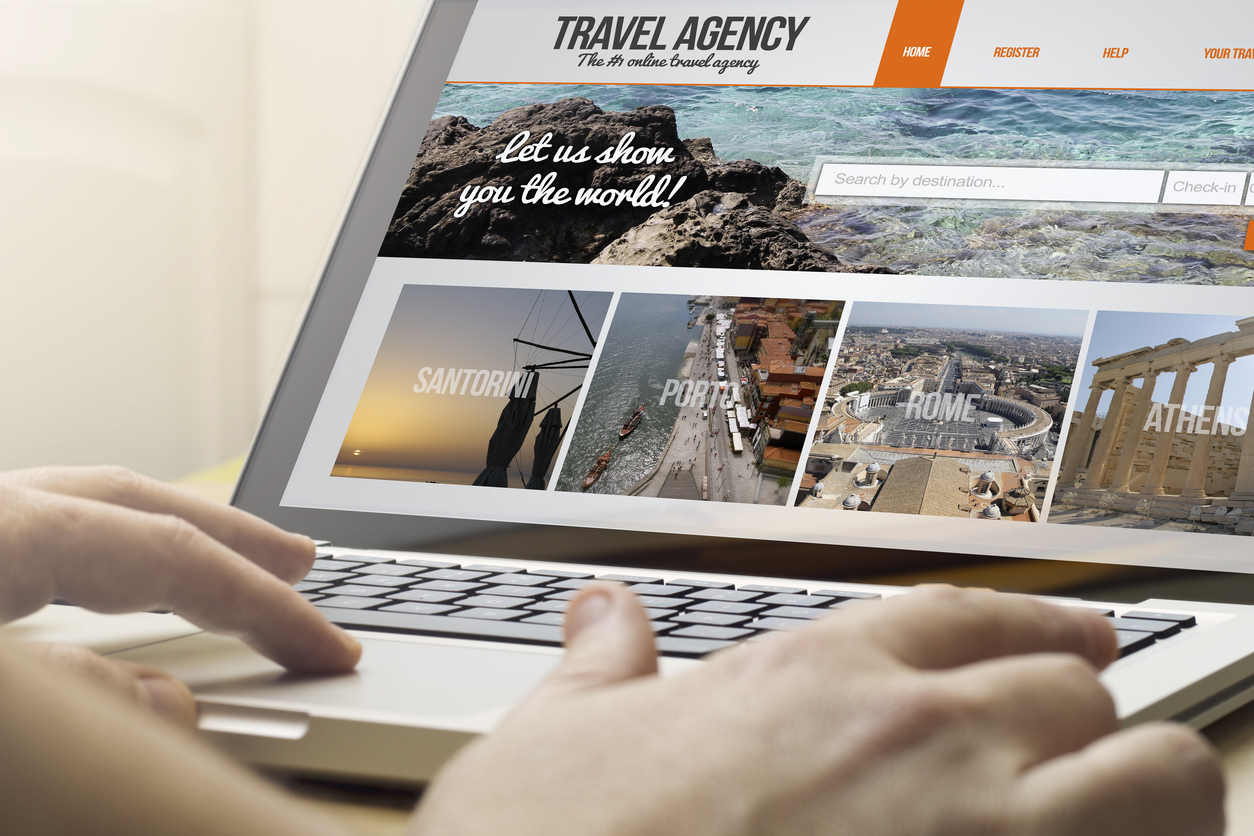 An online travel agency (OTA) is a web-based marketplace that allows consumers to research and book travel products like hotels, flights, and tours. While a travel agency online provides massive global visibility for hotels, they typically charge commissions ranging from 15% to 30% per booking, making direct booking strategies essential for profit.
15 Strategies to Help Reduce OTA Fees for Your Hotel
 1. Strengthen Your Direct Booking Engine
 1. Strengthen Your Direct Booking Engine
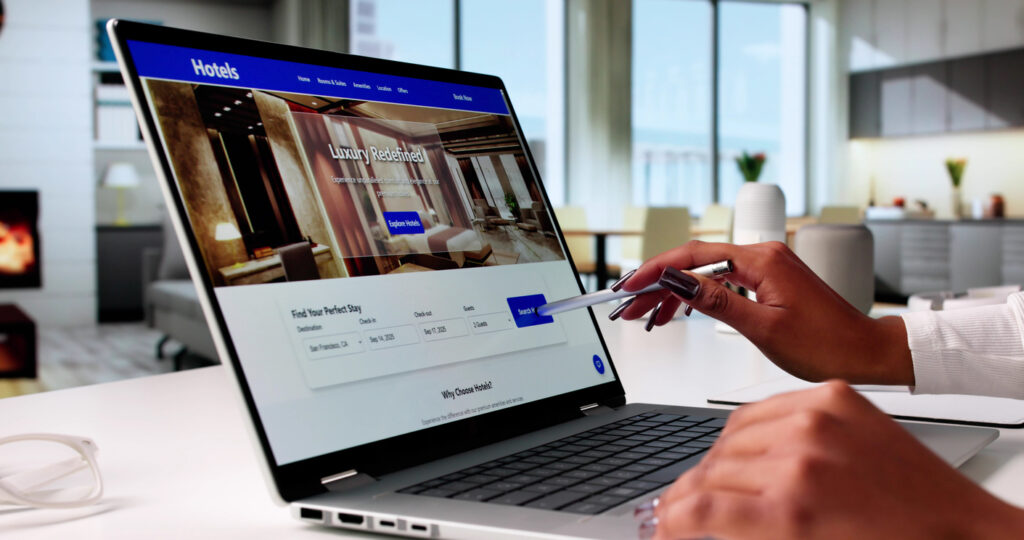
The first line of defense against excessive commission fees is your own digital storefront. If your website feels like a relic from 2005 while an online travel agency offers a slick, frictionless experience, you’ve already lost the booking.
Research shows that 88% of online consumers are less likely to return to a site after a bad user experience, and even a one-second delay in page load time can lead to a 7% reduction in conversions. To win, your direct channel must match the speed and professional standards found on top rated online travel agencies for hotel bookings platforms.
Most independent hotels lose direct business not because their rooms aren’t great, but because their booking process is a chore. To win, your direct channel must match or exceed the convenience found on a top-rated online travel agency for hotel booking platforms.
Why Your IBE Must Compete with the Travel Agency Online Experience
Guests gravitate toward OTAs because of the perceived ease of use. If your Internet Booking Engine (IBE) is clunky, they will return to the travel agency online to finish the transaction.
- UX Parity: Your booking engine needs a clean, intuitive interface that mirrors the professional standards of the best online travel agency.
- Mobile-First Design: With more travelers booking on the go, a mobile-responsive IBE has become a requirement to capture “in-the-moment” demand.
- Rate Transparency: Display your rates clearly alongside value-added benefits. If a guest has to hunt for the final price, they’ll head back to an online agency travel site for clarity.
Rate Match and Urgency Tactics That Shift Behavior
Using Simple Booking IBE by Zucchetti allows you to fight OTA dominance by integrating tools that actively convince users to stay on your site.
- Rate Match Tools: Show live comparisons against OTAs directly on your booking engine to prove your direct rate is the best deal.
- Urgency Triggers: Use real-time data to show how many people are looking at a room or how few units are left, a tactic perfected by the best online travel agency for global travel.
- Direct-Only Perks: Highlight benefits like free late check-out or complimentary breakfast that are only available through your portal.
By bringing pricing decisions exactly where the buying decisions are made, you remove the search-and-compare friction that usually leads guests back to a third-party online travel agency.
2. Centralize Distribution with a Modern CRS
Many accommodation businesses fall into a trap where they either avoid booking with too many OTAs because it’s difficult to manually manage a high number of listings, or they have different prices across different channels. This inevitably leads to missed revenue opportunities and/or significant price disparities. A modern Central Reservation System (CRS) like Vertical Booking CRS by Zuchetti acts as the brain of your operation, ensuring your inventory is synced in real-time across every agency travel online touchpoint.
Why Fragmented Systems Inflate OTA Dependency
When your PMS doesn’t talk to your booking engine or your channel manager, you end up playing a game of digital “Whac-A-Mole.”
- Manual Updates: Manually entering rates into every online travel agency software dashboard wastes hours of staff time that could be spent on guest service, and all but guarantees that you’ll have different prices on different platforms
- Channel Lag: If you sell your last room on Expedia but your direct site still shows availability, you’re looking at a potential overbooking nightmare.
- Inventory Mismatches: Disconnected systems often lead to “safe” inventory loading, where you hold back rooms from certain channels, potentially missing out on high-value online business travel agency bookings.
Using Integrated Online Travel Agency Software to Optimize Channel Mix
Implementing Vertical Booking CRS by Zucchetti provides a unique dashboard to manage GDS, OTAs, and your website booking engine simultaneously. This allows you to take a strategic approach to rates rather than a reactive one.
| Feature | Disconnected Distribution | Centralized (Zucchetti CRS) |
| Update Speed | Manual/Delayed (High Risk) | Real-Time Sync (Low Risk) |
| Data Integrity | Siloed and Fragmented | Single Version of Truth |
| Staff Efficiency | High Manual Labor | Automated Workflows |
| Overbooking Risk | Significant | Minimized via Real-Time Sync |
3. Implement Dynamic Pricing to Compete Intelligently
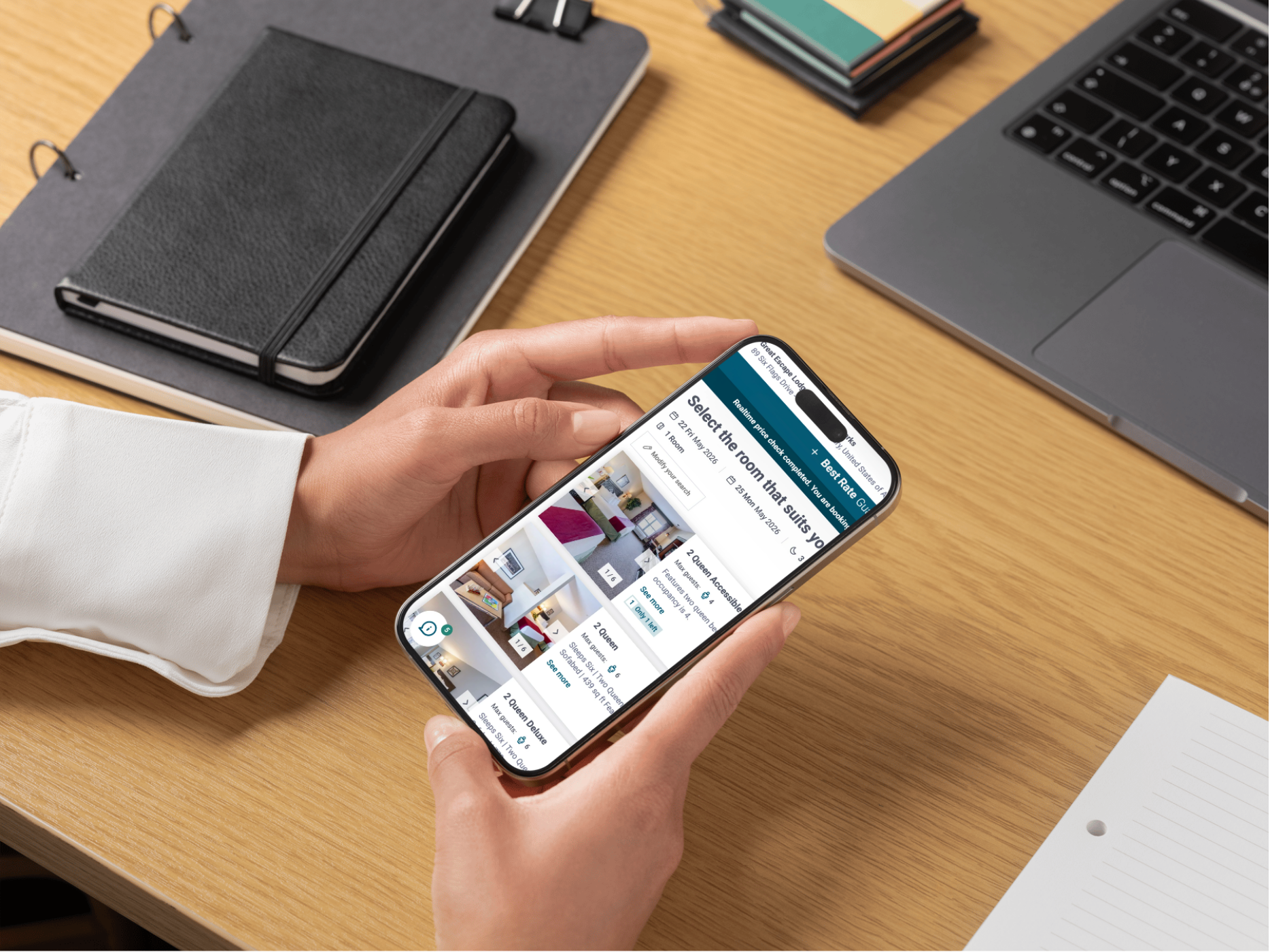 If your rates are static, you are essentially letting the top-rated online travel agency for hotel bookings dictate your value. The market moves in minutes, not months. To protect your margins, you must adopt dynamic pricing that responds to real-time demand shifts.
Why Static BAR Strategies Feed OTA Reliance
Static Best Available Rates (BAR) are a gift to OTAs. When demand spikes, an online travel agency with better algorithms will scoop up the margin you left on the table.
Conversely, when demand drops, your static rate looks overpriced compared to the best online travel agency for global travel listings, leading to empty rooms.
Using RMS Data to Adjust in Real Time
Lybra RMS by Zucchetti uses AI to continuously learn how pricing impacts your booking patterns. It automates the week-after-week” reporting and pricing decisions that you need to stay on track.
- Trend Tracking: Monitor competitor rates and market progress instantly.
- Automated Autopilot: Let the system suggest or even deploy rate changes as market conditions shift.
Flight Search Data and Demand Forecasting
One of the most powerful ways to counter online agency travel dominance is by looking at intent data before it hits the OTAs. By analyzing flight search patterns, you can forecast demand surges weeks before the first hotel booking is even made. This foresight allows you to raise rates on your direct channel and the travel agency online simultaneously, capturing maximum RevPAR.
4. Optimize Channel Mix Instead of Cutting OTAs
The goal isn’t to eliminate the online travel agency; it’s to manage it. OTAs provide a “billboard effect” that can bring guests to your door who would never have found you otherwise. The billboard effect is like when you’re driving and pass a billboard: the idea is that you’ll remember it and then get more information about whatever the billboard was advertising later. The OTA functions in the same way because travellers will often use OTAs to browse options before making a selection, and sometimes opt to book with the hotel directly. The secret is knowing when to use OTAs and when to turn the faucet off.
Segmenting by Market (Leisure, Corporate, Group)
Different channels serve different purposes. While the best online travel agency for attractions might be great for leisure guests, it’s a poor choice for high-yield corporate travelers.
- Leisure: Best served through targeted online marketing for travel agency partnerships and metasearch.
- Corporate: High-frequency, high-margin guests often found via an online corporate travel agency or GDS.
High-Need Periods vs. Low-Demand Periods
During peak seasons or major local events, you don’t need an online travel agency to fill your rooms. This is when you should restrict OTA inventory and push for direct bookings only. Conversely, during shoulder periods, a travel agency online business partner can help fill gaps that your direct marketing might miss.
5. Leverage GDS to Capture Higher-Yield Corporate Business
While many focus solely on the online travel agency landscape, the GDS remains a powerhouse for capturing corporate volume. This is the realm of the online corporate travel agency, where travel agents manage high-budget accounts.
Rate Comparison Summary Table
| Channel | Typical Guest Type | Margin Impact |
| OTA (Leisure) | Price Sensitive | Lower (15-30 Commission) |
| GDS (Corporate) | Business/Frequent | Higher (Negotiated Rates) |
| Direct Web | Loyal/Targeted | Highest (No Commission) |
The Role of the Online Corporate Travel Agency Ecosystem
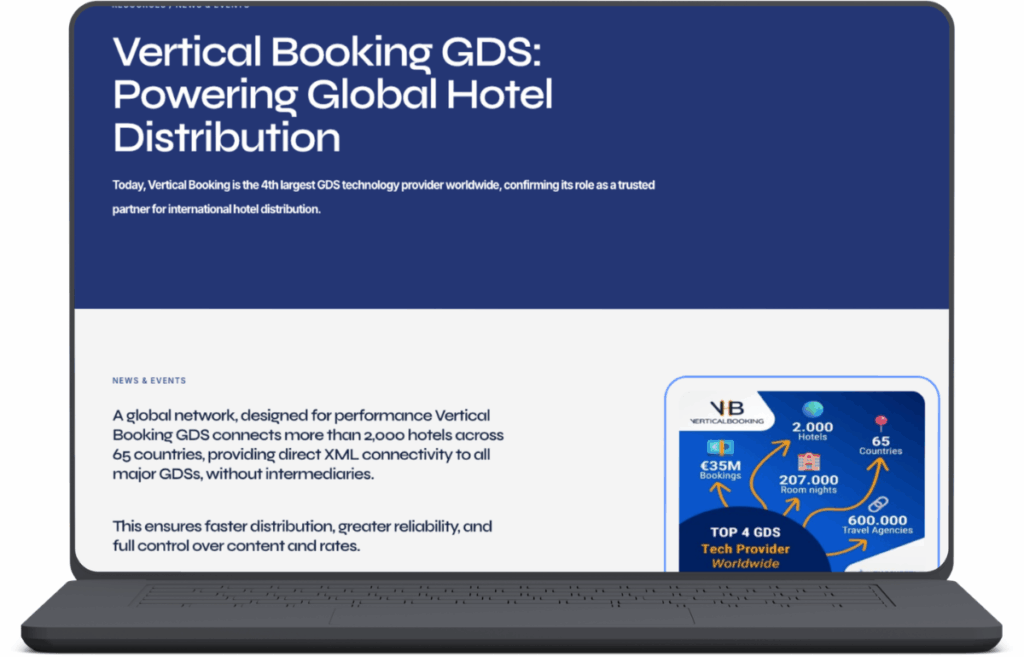
Connecting to the GDS puts your property in front of over 600,000 travel agents worldwide. These aren’t just bargain hunters on a travel agency online site; these are professionals booking for companies with pre-set travel budgets.
Competing for Managed Corporate Volume
By utilizing a CRS like Vertical Booking, you gain seamless GDS connectivity to systems like Amadeus, Sabre, and Galileo, which are leading GDS platforms. This allows you to compete for “managed” travel that never even looks at a standard online travel agency software platform.
6. Use Displacement Analysis to Protect High-Value Dates
 Every time you accept a low-value booking from an online travel agency during a high-demand period, you are displacing a potential high-value guest. Displacement analysis is the process of calculating the opportunity cost of every booking.
Understanding Opportunity Cost
If you have 10 rooms left for a Saturday night and a group wants to book all 10 at a discounted rate, should you take it?
If you could have sold those same rooms individually at a higher rate via your travel agency online business channels or direct site, the group booking actually costs you money.
How AI Revenue Management Prevents Low-Value OTA Fill
Modern systems like Lybra evaluate the impact of group bookings on your overall revenue. It helps you decide when to close off an online agency travel channel to save space for guests who will pay full price or spend more on-site at your restaurant or spa, tracked efficiently via TCPOS by Zucchetti.
7. Create Direct-Only Value Adds (Not Rate Discounts)
To compete with the best online travel agency for global travel, you shouldn’t just lower your price. Rate parity agreements often prevent you from undercutting the travel agency online price anyway. Instead, focus on value.
Packaging, Experiences, and Upsell Strategy
Use your website to offer what an online travel agency cannot: a complete experience.
- Bundled Services: Combine a room with a spa treatment or a meal credit.
- Exclusive Access: Offer early check-in or a better room view exclusively for direct bookers.
- Local Flavor: Partner with local tours and list them as direct-only add-ons, rivaling the best online travel agency for attractions.
9. Deploy Geo-Targeted and Closed User Group Strategies
You can offer lower rates than what is shown on an online travel agency as long as those rates aren’t public. This is the “Closed User Group” strategy.
Controlled Discounting Without Violating Parity
By offering special rates only to your email subscribers or logged-in members, you bypass the public parity rules of the best online travel agency. This rewards loyalty and encourages guests to stop using a travel agency online for your property.
Protecting ADR While Shifting Channel Behavior
Geo-targeting allows you to offer specific deals to travelers from certain regions. For example, you might offer a “Staycation” discount only to people within a 50-mile radius, ensuring you fill rooms without devaluing your brand on a global online agency travel site.
10. Integrate PMS, CRS, RMS, and IBE into One Ecosystem
The biggest mistake independent hotels make is using a patchwork of different systems. When your online travel agency software doesn’t talk to your PMS, data falls through the cracks.
Why “Lowest Common Denominator” Integrations Hurt Margin
Many vendors claim to integrate, but they only do so at a basic level. This lowest common denominator approach means your RMS might not get the full guest history from your PMS, leading to poor pricing suggestions.
The Financial Impact of Unified Data
A unified ecosystem, like Lodgical Solution PMS by Zucchetti, ensures that every data point is shared between your CRS and RMS. This creates “one version of truth,” allowing for automated rate optimization that actually drives revenue rather than just moving numbers around.
11. Use AI-Powered Personalization to Convert Direct
The future of hospitality should be about predicting what a guest wants before they ask. Online travel agency giants spend millions on AI to keep guests on their platforms; you need to do the same on your own site.
Behavioral Targeting
If a guest spends five minutes looking at your “Family Suite” page, your IBE should automatically highlight family-friendly amenities or an offer like “kids eat free”. This level of personalization is how you win against a generic travel agency online.
Conversational Booking and Agentic AI
We are moving toward a world of Agentic AI, where guests will book via AI assistants rather than searching a top rated online travel agency for hotel bookings. Preparing for this shift means having an API-first technology stack that can talk to these AI agents.
12. Improve Direct Channel Conversion Through Friction Reduction
Every extra click in your booking process is an opportunity for a guest to give up and go back to the best online travel agency.
Speed and Modern Payment Processing
Your direct site must be fast. If it takes more than a few seconds to load rates, the guest is gone. Furthermore, you must offer modern online travel agency payment options like Apple Pay or Google Pay to reduce the friction of entering credit card details.
13. Develop an Online Business Travel Agency Strategy
While the massive leisure-focused online travel agency giants dominate the headlines, the business travel sector offers a more stable and higher-margin revenue stream. Capturing this market requires a pivot from broad-market advertising to a specialized online business travel agency strategy.
By catering to the specific needs of corporate bookers, you can bypass the heavy commission structures of public sites and build a recession-proof occupancy base.
Targeting Small and Medium Corporate Accounts
Large corporations often have exclusive contracts with global chains, but the small-to-medium enterprise (SME) market is a goldmine for independent hotels. These businesses often use a travel agency online to book trips because they lack a formal travel department.
- Localized Outreach: Identify companies within a 20-mile radius of your property that frequently host visiting consultants or partners.
- Direct Booking Portals: Use Lodgical Solution PMS by Zucchetti to create dedicated profiles for these accounts, allowing them to book via a private link on your site.
- Streamlined Billing: Offer direct-bill options or simplified expense reporting, providing a level of service no standard online agency travel site can match.
Partnering with Corporate Booking Tools
To compete with the best online travel agency for global travel, your property must be visible where business travelers shop. This means integrating with the GDSs used by corporate travel managers.
- GDS Connectivity: Ensure your CRS pushes real-time availability to the GDS, the backbone of the online corporate travel agency world.
- Tech Compatibility: Business travelers prioritize speed and “one-click” booking. A seamless integration between your IBE and corporate procurement systems ensures you don’t lose the lead to a more tech-savvy competitor.
Negotiated Rate Programs
Negotiated rates are your strongest weapon against online travel agency software fee creep. By offering a set company rate, you guarantee volume in exchange for a discount that is still more profitable than a high-commission OTA booking.
- Dynamic vs. Flat Rates: Use Lybra RMS by Zucchetti to determine if you should offer a flat yearly rate or a percentage off your BAR.
- Loyalty Incentives: Reward corporate bookers who skip the travel agency online with automatic room upgrades or breakfast vouchers, cementing the direct relationship.
- Performance Tracking: Review account production quarterly to ensure the volume justifies the discount, adjusting your strategy based on actual stay data.
14. Strengthen Loyalty and Repeat Guest Capture
 The most expensive guest to acquire is a new one from an online travel agency. The cheapest is a returning one who books directly.
Capturing OTA Guests Post-Stay
When a guest stays with you via an agency travel online, your goal should be to convert them for their next visit. Use your PMS to capture their email (with permission) and send a personalized thank-you note with a “direct booker” discount for their next stay.
15. Build an AI-Ready, API-First Distribution Model
The landscape of the online travel agency is shifting from a search-and-click model to one defined by automation and predictive intelligence. To survive this transition, hotels must move away from rigid, legacy systems and adopt an API-first distribution model.
This ensures your property remains visible not just on a traditional travel agency online website, but across the entire emerging AI ecosystem.
Headless Booking Engines
A “headless” architecture decouples the front-end user interface from the back-end booking logic. This allows your hotel to process reservations through any digital touchpoint, whether it’s a social media “book now” button, a wearable device, or a localized online agency travel app, without losing data integrity.
By using a headless approach with Simple Booking IBE by Zucchetti, you ensure that your direct channel is as flexible and omnipresent as the best online travel agency for global travel.
Conversational AI and Travel Planning Assistants
Travelers are using voice assistants and AI bots to plan entire itineraries. If your tech stack isn’t AI-ready, these assistants won’t be able to “read” your live inventory, forcing them to pull data from a top-rated online travel agency for hotel bookings instead.
Integrating your Lodgical Solution PMS with AI-friendly distribution tools ensures that when a guest asks their AI assistant for a room, your direct rates are the first ones surfaced.
Preparing for the Future Beyond the Traditional Travel Agency Online Model
The future of online travel agency software is about moving beyond static listings. Tomorrow’s winners will use unified data from their CRS and RMS to feed real-time, personalized offers directly into the guest’s digital journey.
By staying informed on online travel agency news and investing in an integrated Zucchetti ecosystem, you aren’t just reacting to the market; you are building a future-proof distribution strategy that consistently outperforms the traditional agency travel online model.
Conclusion
Managing your online travel agency strategy shouldn’t feel like giving away your profits just to keep your rooms full. By transitioning from a patchwork of disconnected tools to a unified ecosystem, leveraging Vertical Booking CRS, Lybra RMS, and Simple Booking IBE, you reclaim control over your margins and guest relationships. Reducing OTA dependency is about smarter distribution, not just cutting channels.
Ready to stop the commission bleed and optimize your hotel’s bottom line? Contact us today to see how our integrated technology suite turns your direct channel into your most powerful revenue generator.






North America
Zucchetti North America offers hospitality solutions to hotels and other lodging providers, as well as on-site dining operations across North America.
Quick Links
Contact Us

34 West Oak St, Sturgeon Bay, WI 54235
7901 Kingspointe Pkwy Ste 9, Orlando, FL 32819
500 SW 116th Ave, Portland, OR 97225

+1.503.343.4263

sales@zucchettinorthamerica.com
©2026 Zucchetti. All rights reserved.