

Top 7 Small Hotel Booking Software Compared

Table of Contents
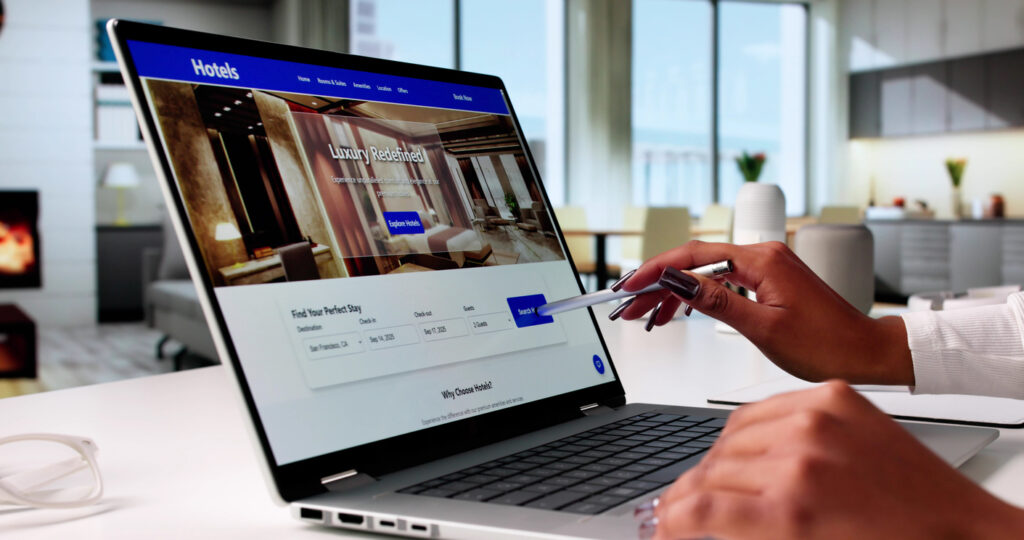
Running a small hotel can feel like trying to win a game of Tetris where the blocks move faster every hour. You’re juggling guest check-ins, housekeeping schedules, and that one OTA channel that somehow always manages to overbook your best suite.
Finding the right booking software for a small or boutique hotel means taking back control of the “Book Now” button on your website, so you can regain control of your margins and finally stop those 15-30% Online Travel Agency (OTA) commissions from eating your profit.
Let’s look at the heavy hitters that actually help you compete with the big chains without needing a degree in IT.
Key Takeaways
- Prioritize Direct Bookings: Use AI-driven tools to reduce OTA reliance and reclaim your profit margins.
- Demand GDS Access: Open your property to 600,000+ travel agents to capture high-value corporate travelers.
- Automation is Essential: Replace manual pricing with AI optimization to capture a 5-15% revenue increase.
- Seek Deep Integration: Avoid data silos by choosing an ecosystem that offers a single version of truth.
What is a Small Hotel Booking Software?
Small hotel booking software is an all-in-one digital platform designed to manage reservations, automate room inventory, and process guest payments for independent properties, boutique hotels, and B&Bs.
Unlike basic manual logs, these systems function as a centralized hub that synchronizes a property’s direct website booking engine with OTAs like Expedia or Booking.com.
Top 7 Small Hotel Booking Software Platforms Compared
Selecting the right small hotel booking software is the difference between running a business that thrives and one that just survives. For independent operators, the goal is to move from a checklist of features to a strategic ecosystem that automates the heavy lifting.
| Software | Best For | Core Strength | Integration Depth |
| Zucchetti North America | Independents & Groups | Integrated Ecosystem (CRS+PMS+RMS) | High (Native) |
| Lodgify | Vacation Rentals | Simple Website Builder | Moderate |
| Little Hotelier | B&Bs / <20 Rooms | Ease of Use | High (Hotel app store) |
| RoomRaccoon | Boutique Hotels | Operational Automation | Moderate (Hotel app store) |
| eZee Absolute | Global Independents | Broad Feature Set | Moderate |
| Hotelogix | Multi-Property Groups | Centralized Reporting | Moderate |
| Cloudbeds | Independent Hotels & Hostels | All-in-One Simplicity | High (Marketplace) |
1. Zucchetti North America (Vertical Booking + Simple Booking)
 Zucchetti North America doesn’t just offer a small hotel reservation system. It provides a unified technology ecosystem designed to help independents compete with massive global chains.
By integrating Vertical Booking CRS, Lodgical Solutions PM, and Lybra RMS, Zuchetti eliminates the data silos that typically lead to missed revenue opportunities.
Strengths for Small Hotels
- Integrated Ecosystem: This is a single-vendor approach where the PMS, CRS, and RMS work harmoniously to create one version of truth for your data, while still seamlessly connecting with the tools you use every day.
- Global Distribution Power: Beyond standard OTAs, Zucchetti provides GDS connectivity to over 600,000 travel agents worldwide.
- AI-Powered Revenue: Using the Lybra Assistant RMS, hotels can automate pricing decisions based on real-time flight search data and market trends.
- Deep Integrations: Their connections go beyond basic API calls, allowing for configurable features that adapt to the property rather than forcing you to change your workflow.
2. Lodgify
 Lodgify is a streamlined small hotel booking system primarily built for owner-operators managing vacation rentals or hybrid boutique models.
Strengths
- Easy-to-launch website builder with integrated booking engine
- Built-in channel management for OTA synchronization
- Designed for owner-operators and small portfolios
- Suitable for hybrid boutique hotel + vacation rental models
Considerations
- Primarily optimized for short-term rentals rather than traditional hotel operations
- Limited native GDS connectivity
- Revenue management typically requires third-party tools
- Less suitable for properties needing corporate, group, or advanced rate strategies
3. Little Hotelier
 Little Hotelier is a booking and management platform designed specifically for small accommodation providers. It combines a booking engine, channel manager, and simplified PMS functionality into one lightweight system.
Strengths
- Designed for small properties (typically under 20 rooms)
- Simple interface with minimal training required
- Integrated channel management
- Suitable for owner-operated properties without dedicated front office staff
Considerations
- Limited scalability for growing multi-property groups
- Advanced revenue management features typically require third-party tools
- Less robust reporting and portfolio-level visibility
- May not support complex corporate, group, or contract rate structures
4. RoomRaccoon
 RoomRaccoon offers an all-in-one cloud platform combining PMS, channel manager, and booking engine functionality. It is positioned toward independent and boutique hotels seeking operational automation.
Strengths
- Integrated system reduces vendor complexity
- Automation features for pricing rules and operational workflows
- Modern, user-friendly interface
- Suitable for independent hotels focused on operational efficiency
Considerations
- Advanced distribution and GDS capabilities may require configuration or external support
- Revenue optimization may not be as advanced as dedicated RMS platforms
- Multi-property centralization varies depending on implementation
5. eZee Absolute
 eZee Absolute is a cloud-based PMS with a booking engine and channel management tools designed for independent hotels across global markets.
Strengths
- Broad feature set covering core operational needs
- Integrated channel manager
- Suitable for budget-conscious independents
- Supports multi-property setups
Considerations
- Revenue management functionality often requires external systems
- The user interface may feel less modern compared to newer platforms
- GDS and advanced corporate distribution may require add-ons
6. Hotelogix
 Hotelogix provides cloud-based PMS, booking engine, and distribution tools aimed at small to mid-sized hotels and multi-property operators.
Strengths
- Multi-property management capabilities
- Centralized reporting across properties
- Integrated booking engine and channel manager
- Suitable for regional hotel groups
Considerations
- Advanced revenue management typically requires third-party integration
- May require configuration for complex rate strategies
- Integration depth varies depending on the external systems used
7. Cloudbeds
 Cloudbeds is an all-in-one hospitality platform designed primarily for independent hotels, hostels, bed and breakfasts, and vacation rentals looking for a single system to manage core operations.
Strengths
- Broad feature set covering PMS, channel manager, and booking engine in one platform
- Large integration marketplace with 300+ third-party connections
- Accessible interface suited to smaller properties with limited IT resources
- Strong presence in the hostel and budget accommodation segment
Considerations
- Revenue management capabilities are limited without a separate RMS
- Integration depth with third-party tools varies in quality
- Properties with more complex distribution needs may outgrow the platform
- Support experience can be inconsistent at scale
How to Choose the Right Small Hotel Reservation System
Selecting a small hotel reservation system is about choosing the central nervous system of your business. With OTA commissions potentially reaching as high as 30%, the wrong choice can quietly drain your profitability. Use this four-step framework to ensure your tech stack supports your bottom line.
Step 1: Define Your Distribution Strategy
Your software should dictate your reach, not limit it. Assess how you actually get guests through the door:
- OTA Dependency: If you rely heavily on Booking.com or Expedia, you need a system that syncs rates and availability in real-time to prevent overbookings.
- GDS Reach: Many small properties overlook the Global Distribution System, yet it provides access to over 600,000 travel agents. If you want high-value corporate bookings, GDS connectivity is non-negotiable.
Step 2: Evaluate Revenue Management Capabilities
Most small hotels leave money on the table because they price rooms reactively.
- Manual vs. AI: Are you still manually changing rates based on a competitor’s website? Modern boutique hotel reservation systems now use AI to adjust prices 24/7 based on local demand and flight data.
- The “Hidden” Cost: Without an integrated RMS, the average hotel misses out on a 5% to 15% revenue lift that automated dynamic pricing typically provides.
Step 3: Assess Integration Depth
There is a massive difference between a “basic API sync” and a native integration.
- One Version of Truth: A basic sync often results in “data lag,” where your PMS and booking engine aren’t aligned.
- Deep Connectivity: Look for an ecosystem where the small hotel booking system shares a database with your PMS. This ensures that guest preferences, loyalty data, and billing are consistent across every touchpoint.
Step 4: Consider Your Growth
Your software should scale as fast as your ambition.
- Multi-Property Needs: If you plan to add a second location or manage a mix of boutique rooms and vacation rentals, you need centralized reporting.
- Diversification: Ensure the platform can handle complex setups, such as resorts or marinas, without requiring a complete system overhaul.
Conclusion
The right small hotel booking software moves you from being a reactive manager to a proactive strategist. By focusing on deep integration, AI-powered revenue management, and wide-reaching distribution, you can finally outmaneuver the big chains while keeping more of your hard-earned revenue.
Ready to see how a truly integrated ecosystem can transform your property? Contact Zucchetti North America today to discover how our suite of tools can automate your growth and maximize your direct bookings.







Related Articles

Central Reservation System (CRS): A Practical Guide for Hotels
Hotels run on inventory, timing, and trust. When a guest clicks “Book Now,” there’s no...
How to Choose the Right Hotel Reservation System
A great stay starts long before check-in. It starts the moment a guest searches availability,...

North America
Zucchetti North America offers hospitality solutions to hotels and other lodging providers, as well as on-site dining operations across North America.
Quick Links
Contact Us

34 West Oak St, Sturgeon Bay, WI 54235
7901 Kingspointe Pkwy Ste 9, Orlando, FL 32819
500 SW 116th Ave, Portland, OR 97225

+1.503.343.4263

sales@zucchettinorthamerica.com
©2026 Zucchetti. All rights reserved.