

Hotel Internet Booking Engine (IBE) vs OTA: A Comparative Guide

Table of Contents
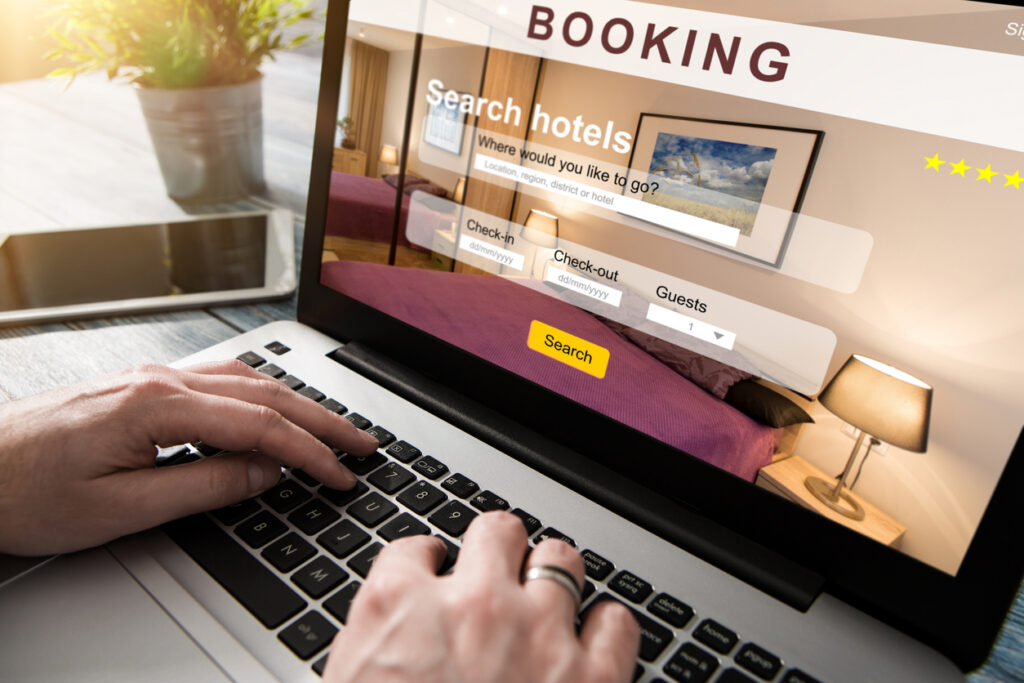
Every direct booking strengthens your margins. Yet many hotels continue to depend heavily on Online Travel Agencies (OTAs), trading revenue and guest ownership for visibility. The real opportunity is not choosing one channel over the other, but using each strategically to turn every booking into a measurable advantage.
Direct bookings through an internet booking engine give hotels full control over pricing, packaging, and guest engagement. They protect brand integrity and provide access to valuable first-party data. OTAs, on the other hand, expand reach and generate demand at scale. Success lies in balancing exposure with control.
As the hospitality landscape shifts toward agentic AI and AI-assisted travel planning, this balance becomes even more critical. Hotels that optimize their booking engine, tightly integrate pricing and availability, and retain ownership of guest data are better positioned to capture bookings at the moment decisions are made.
This guide explores the differences between an internal booking engine and OTAs, outlines strategies to reduce dependency without sacrificing visibility, and explains how Zucchetti’s integrated ecosystem supports direct booking performance in an AI-driven distribution environment.
Key Takeaways
- Internet booking engines give hotels control over pricing, promotions, guest data, and the brand-first experience, making direct bookings more profitable.
- OTAs provide reach, demand aggregation, and trust, but come with commission costs and limited access to guest relationships.
- A hybrid strategy using both IBEs and OTAs balances reach with profitability, centralizing control through a CRS for efficiency.
- Reducing OTA dependency is possible through rate parity, value-added offers, and first-party data capture for pre-arrival upsells and post-stay engagement.
- Zucchetti’s integrated CRS, IBE, and RMS solutions enable hotels to capture bookings directly, act on first-party data, and future-proof operations in an AI-driven distribution landscape.
Hotel Internet Booking Engine vs OTA – Why This Comparison Matters for Hotels
 The question is not whether hotels should use an online travel agency or rely solely on their own booking engine. In today’s distribution landscape, both play an important role. What matters is understanding how each channel contributes to visibility, profitability, and long-term guest relationships.
OTAs provide reach and demand. Your hotel internet booking engine protects margin and brand control. A strategic distribution approach ensures these channels work together rather than competing with each other.
Internet Booking Engine Hotel Model Overview
An internet booking engine allows hotels to capture direct reservations through their own website, maintaining full control over the booking journey. Hotels can tailor promotions, packages, and loyalty incentives to align with brand positioning while retaining complete ownership of guest data.
This model strengthens brand consistency from the first website interaction through the stay and beyond. It also enables deeper personalization and stronger long-term guest relationships.
OTA Model Overview (Strengths and Trade-Offs)
Online travel agencies excel at driving awareness and aggregating global demand. Their marketing power, search visibility, and consumer trust introduce hotels to travelers who may not have discovered the property otherwise.
However, OTA bookings carry commission costs (which are often between 15 to 20%, but can be lower for niche platforms) and limit direct access to guest data. The booking experience is shaped primarily by the OTA platform, which can reduce opportunities for brand differentiation and post-stay engagement.
Hotel Internet Booking Engine vs OTA – High-Level Comparison
| Feature | Internet Booking Engine | OTA |
| Ownership | Full control of the booking process | OTA controls the transaction |
| Pricing & Promotions Flexibility | High | Limited |
| Guest Data | Complete access | Restricted |
| Brand Experience | Brand-first, consistent | OTA branding dominates |
| Relationship with Guests | Direct engagement | Indirect, limited interaction |
Why Most Hotels Need Both Strategically
Most hotels benefit from a hybrid distribution strategy. OTAs expand market reach and generate incremental demand. Direct booking engines strengthen profitability, protect brand integrity, and support guest loyalty.
The key is orchestration. When distribution is centralized through a Property Management System (PMS) and a Central Reservation System (CRS), both channels can operate in alignment. Rates remain synchronized, inventory updates are in real time, and channel performance can be measured accurately.
Success does not come from choosing one over the other. It comes from using each channel intentionally, with clear objectives tied to margin, brand positioning, and long-term revenue growth.
How an Internet Booking Engine Reduces OTA Dependency
 Reducing OTA dependency is not about eliminating third-party channels. It is about using them strategically while strengthening your direct booking performance. A well-implemented internet booking engine allows hotels to capture more high-margin reservations without sacrificing visibility.
A key concept here is the Billboard Effect.
Travelers often discover a property on an OTA, compare options, read reviews, and then visit the hotel’s official website to complete the booking. In this scenario, the OTA acts as a marketing channel, while the direct booking engine captures the transaction. Without a strong booking engine experience, that opportunity is lost.
Shifting Demand From OTAs to Direct
Hotels can encourage direct bookings without competing purely on price. Rate parity ensures consistency across channels, while value-added incentives such as complimentary breakfast, flexible cancellation, room upgrades, or loyalty benefits provide reasons to book direct.
When a guest finds your property on an OTA and then visits your website, the booking engine must reinforce brand trust, provide a seamless user experience, and clearly communicate the added value of booking directly with you. This is how the Billboard Effect translates into a measurable revenue shift.
Capturing the Guest Relationship Earlier
Direct bookings allow hotels to own the guest relationship from the start. First-party data enables:
- Personalized communication
- Pre-arrival upsell opportunities
- Post-stay engagement
This strengthens loyalty and repeat business. Owning the guest journey also provides insight that OTAs cannot supply, allowing hotels to tailor experiences more effectively.
OTA vs Direct Booking – Revenue and Control Impact
| Feature | OTA Booking | Direct Booking via IBE |
| Revenue Retention | Lower due to commissions | Higher, no commission fees |
| Guest Data | Limited, mostly anonymized | Full access to first-party data |
| Upsell Opportunities | Minimal | Strong, pre-arrival and on-site |
| Guest Relationship | Indirect | Direct and brand-controlled |
| Marketing Flexibility | Restricted | Fully customizable |
The goal is not to abandon OTAs. They remain powerful demand generators. The strategic advantage comes from ensuring your booking engine is strong enough to capture guests influenced by OTAs and convert that visibility into profitable, direct revenue.
Preparing for Agentic AI: Why Booking Architecture Now Matters
The rise of agentic AI is shifting how travelers discover and book hotels. Hotels that design their booking architecture for this new landscape can capture bookings directly and maintain control over the guest experience. Early adoption ensures a competitive advantage as AI-driven decision-making becomes the norm.
How Agentic AI Is Changing Hotel Discoverability
Guests increasingly rely on AI assistants to make booking decisions instead of browsing multiple websites. AI agents prioritize hotels with:
- Structured data
- Real-time availability
- Responsive booking systems
Properties that optimize for AI-assisted discovery are more likely to be recommended, driving direct bookings and reducing reliance on traditional search channels.
Why Traditional OTA-Centric Models Fall Short in an AI-First World
OTA-centric models limit a hotel’s control over the booking interface, pricing presentation, and guest experience. While OTAs deploy their own AI-driven personalization, hotels have limited ability to influence how their product is merchandised or dynamically adapted within those closed marketplaces.
As AI-powered travel planning becomes more prominent, hotels relying solely on OTA channels may face constraints in deploying their own real-time pricing logic, packaging strategies, or contextual guest interactions.
How Zucchetti Supports Discoverability in Agentic AI
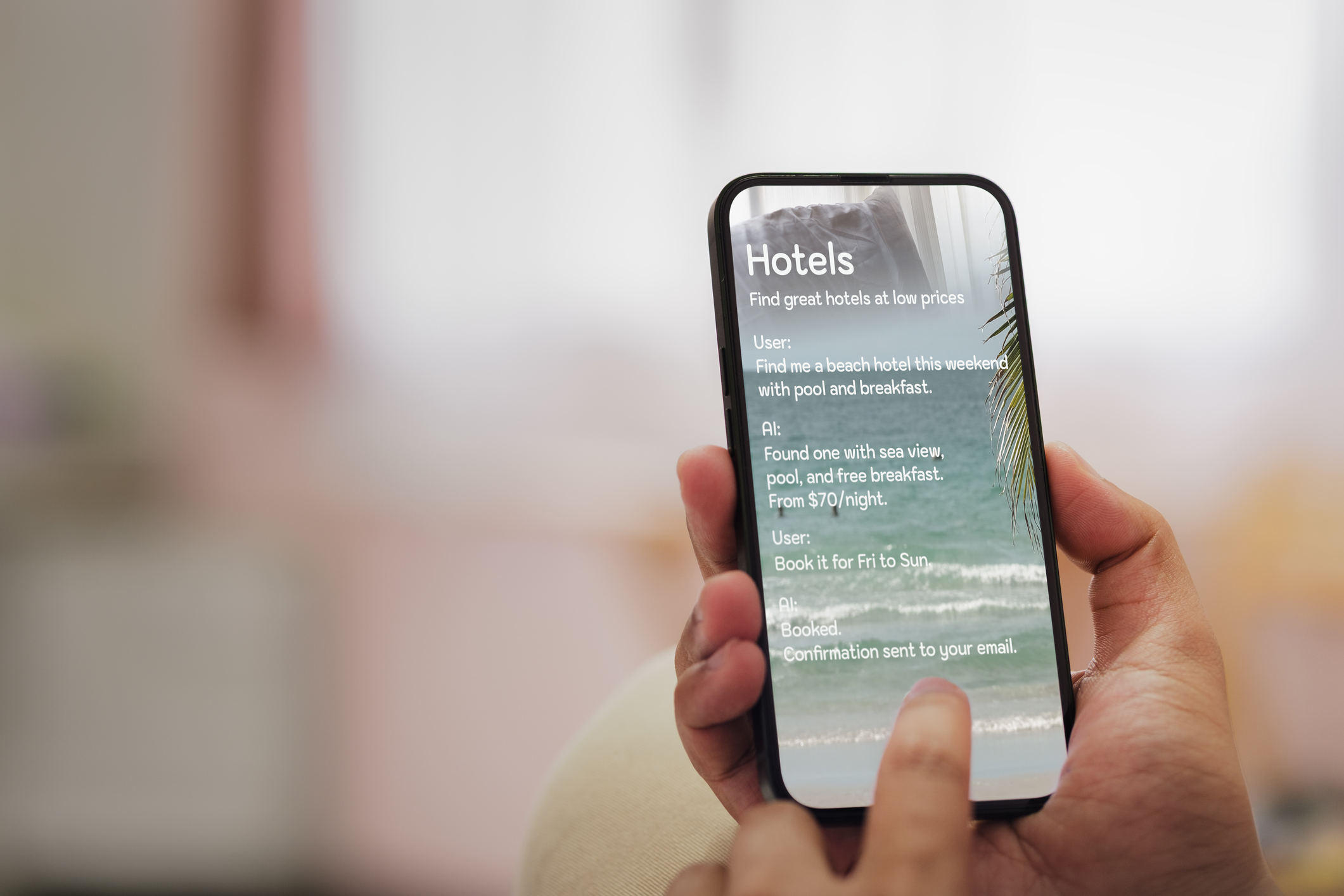 Zucchetti equips hotels to compete in an AI-driven distribution landscape by unifying CRS, booking engine, PMS, and RMS within an integrated technology ecosystem. Rather than adding AI as a surface feature, Zucchetti connects pricing logic, availability, and demand intelligence so booking decisions and pricing decisions occur within the same environment.
Booking And Pricing Where Decisions Are Made
A core differentiator in Zucchetti’s architecture is the tight integration between the Vertical Booking CRS, Simple Booking engine, and Lybra Assistant RMS.
This integration enables real-time synchronization of rates, inventory, and demand signals. Pricing recommendations generated by Lybra, including insights derived from booking pace and flight search data, can be reflected directly at the point of conversion.
Instead of pricing being calculated in isolation and pushed outward, decision logic operates within the booking flow itself, supporting dynamic optimization as guests search and book.
Structured, API-First Access To Availability And Rates
Zucchetti’s centralized CRS architecture supports structured connectivity across PMS platforms, channel managers, and distribution networks. This design ensures a consistent rate logic and availability across channels while maintaining operational alignment.
As conversational booking and AI-assisted travel planning evolve, hotels benefit from having centralized, synchronized access to rates and inventory. Rather than managing fragmented systems, the integrated stack provides the technical foundation required for emerging distribution models.
First-Party Data Ownership That AI Can Act On
Because the booking engine and CRS operate within the hotel’s controlled ecosystem, properties retain ownership of guest profiles, preferences, and booking behavior.
This first-party data enables more informed pricing decisions, personalized offers, and stronger lifecycle engagement. It also reduces over-reliance on third-party marketplaces for demand visibility, aligning with the strategic goal of strengthening direct booking performance.
Future-Proofing Direct Booking In An AI-Led Distribution Landscape
Zucchetti’s integrated ecosystem positions hotels for a distribution landscape increasingly influenced by AI-assisted discovery. By combining real-time pricing intelligence (Lybra), centralized distribution control (CRS), and direct booking optimization (Simple Booking), hotels can compete on responsiveness, data intelligence, and operational cohesion, not exposure alone.
The focus is not on replacing existing channels, but on ensuring that as booking behavior evolves, hotels retain control over pricing logic, guest data, and the conversion experience.
Conclusion: IBE vs OTA – Control the Booking Moment
OTAs provide reach and demand aggregation, but they are channels, not strategies. Hotels that place a robust internet booking engine at the center of their distribution gain control over guest data, pricing, availability, and loyalty programs while delivering a consistent brand-first experience.
Focusing on direct bookings reduces dependence on third-party platforms, allows personalized offers and intelligent upselling, and captures first-party data to strengthen loyalty. A strategic combination of hotel internet booking engines and OTAs balances profitability with reach, giving hotels flexibility to adapt to market shifts and emerging technologies.
Investing in a modern internet booking engine prepares your property for an AI-driven, guest-centric booking landscape.
Maximize revenue, retain control over guest relationships, and future-proof your distribution by contacting Zucchetti North America to explore their integrated CRS, hotel internet booking engine, and RMS solutions.








North America
Zucchetti North America offers hospitality solutions to hotels and other lodging providers, as well as on-site dining operations across North America.
Quick Links
Contact Us

34 West Oak St, Sturgeon Bay, WI 54235
7901 Kingspointe Pkwy Ste 9, Orlando, FL 32819
500 SW 116th Ave, Portland, OR 97225

+1.503.343.4263

sales@zucchettinorthamerica.com
©2026 Zucchetti. All rights reserved.