

9 Hotel Marketing Ideas to Boost Occupancy

Table of Contents

Independent hotels and regional hotel groups face a difficult reality: they’re competing for the same guests as global brands with larger marketing budgets, dedicated revenue teams, and sophisticated technology. Simply spending more on advertising isn’t realistic for most properties, yet standing still means losing bookings to competitors that are easier to find, easier to book, and better at engaging guests throughout their journey.
The good news is that increasing occupancy doesn’t require enterprise-level resources. It requires focusing on the marketing activities that deliver the greatest return, from strengthening your direct booking channel and improving your online visibility to automating guest communications and using smarter pricing strategies.
The biggest difference between reactive and proactive marketing is technology. When your property management system (PMS), central reservation system (CRS), booking engine, and revenue management tools work together, your team can personalize the guest experience, automate repetitive tasks, and make better decisions with less effort.
In this guide, you’ll discover nine practical hotel marketing ideas that both independent hotels and multi-property operators can implement to increase direct bookings, improve occupancy, and grow revenue without dramatically increasing marketing spend.
- Prioritize the marketing channels you own. A high-converting website, strong online presence, and effective email marketing generate more profitable direct bookings while reducing OTA dependence.
- Use hospitality marketing automation to scale your marketing. Connected technology enables personalized guest communication, dynamic pricing, and efficient campaigns without expanding your team.
- Measure results consistently. Tracking metrics like direct booking ratio, RevPAR, and acquisition cost ensures every marketing dollar contributes to occupancy and revenue growth.
1. Start With What You Can Control: Your Direct Booking Channel

Your direct booking channel is your most profitable marketing asset. Every reservation made through your website reduces commission costs while giving you complete ownership of the guest relationship.
Optimize Your Hotel Website for Conversion
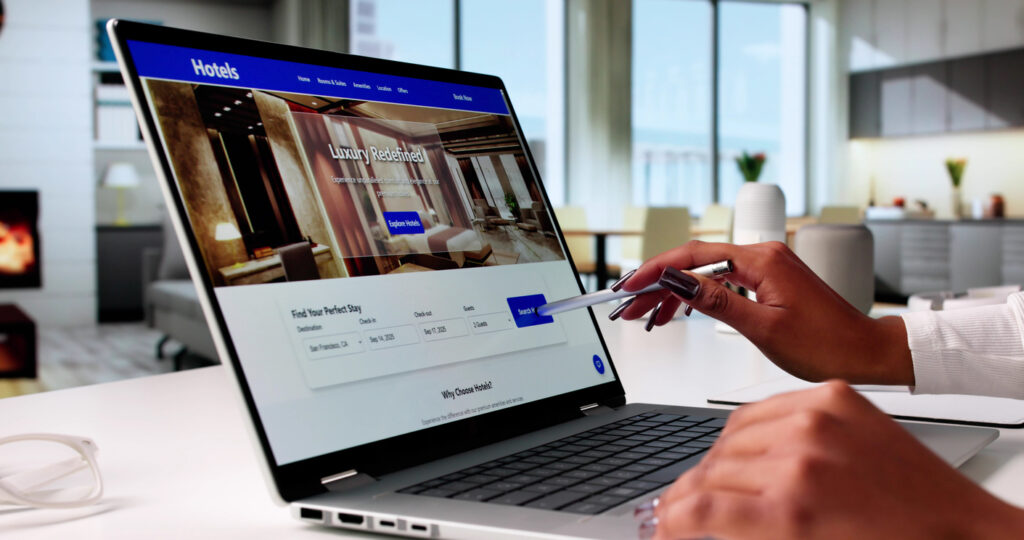
A hotel website should do more than showcase rooms. It should make booking effortless. Guests expect fast load times, intuitive navigation, and a simple reservation process on every device.
Focus on:
- Mobile-first design
- Fast page speeds
- Clear “Book Now” calls-to-action
- A streamlined booking process
- Professional photography
- Guest reviews and trust signals
- Transparent pricing and policies
Hotel Website Conversion Checklist
| Element | Why It Matters | Quick Win |
| Mobile optimization | Most travelers research on phones. | Test and simplify mobile booking. |
| Fast load speed | Slow sites lose bookings. | Compress images and remove unnecessary scripts. |
| Clear CTAs | Encourages immediate action. | Display “Book Now” across key pages. |
| Easy booking engine | Reduces abandonment. | Minimize booking steps. |
| Professional photos | Builds booking confidence. | Update outdated images. |
| Guest reviews | Creates trust. | Feature recent testimonials. |
| Transparent pricing | Reduces surprises. | Display fees and policies clearly. |
Give Guests a Reason to Book Direct
Matching online travel agency (OTA) pricing isn’t enough. Give travelers exclusive benefits they can’t receive elsewhere, such as:
- Early check-in or late checkout
- Complimentary breakfast
- Room upgrades
- Parking
- Flexible cancellation
- Exclusive packages
Promote these perks consistently across your website, email campaigns, and social media. Small incentives often outperform discounts because they add value without eroding room rates.
2. Build Your Online Presence Without Breaking the Budget
A strong online presence helps travelers discover and trust your hotel before they ever visit your website.
Claim and Optimize Your Google Business Profile
A complete Google Business Profile improves local search visibility and costs nothing to maintain.
Best practices include:
- Keep contact details accurate.
- Upload professional photos.
- Publish updates regularly.
- Respond to reviews.
- Answer guest questions promptly.
An active profile signals credibility to both Google and prospective guests.
Use Guest Reviews as a Marketing Channel
Reviews influence booking decisions more than many paid advertisements. Encourage guests to leave reviews shortly after checkout, respond professionally to every review, and showcase positive feedback across your marketing channels.
Review Response Strategy by Platform
| Platform | Volume | Response Priority | Tone Tip |
| High | Very High | Friendly, concise, solution-focused. | |
| TripAdvisor | Medium-High | High | Thank guests and address specifics. |
| Booking.com | High | High | Professional and reassuring. |
| Expedia | Medium | Medium | Appreciate feedback and explain improvements. |
| Lower | Medium | Conversational but professional. |
Social Media That Works for Small Teams
Consistency matters more than polished production.
Focus on one or two platforms where your guests are active and publish authentic content, such as:
- Room tours
- Local attractions
- Staff introductions
- Guest-generated content
- Seasonal offers
Authenticity consistently outperforms perfection.
3. Email Marketing Still Delivers, If You Do It Right

Email remains one of hospitality’s highest-ROI marketing channels because it reaches guests who already know your property.
Successful campaigns rely on segmentation, relevance, and timing.
Segment guests by:
- Leisure vs. business travel
- Families vs. couples
- Booking history
- Geographic location
- Room preferences
Three Automated Campaigns Every Hotel Should Build
- Pre-arrival emails prepare guests while promoting upgrades, dining reservations, transportation, and local experiences.
- Post-stay follow-ups encourage reviews, collect feedback, promote loyalty, and invite repeat bookings.
- Win-back campaigns target guests who haven’t returned in a specific period, such as 12-18 months, with personalized offers based on previous stays.
The more relevant your communication, the higher your engagement and direct booking rates.
4. Hotel Marketing Automation Strategies That Save Time and Drive Revenue
Hospitality marketing automation helps hotels deliver the right message to the right guest without manual effort.
Instead of replacing hospitality, automation allows your team to spend more time serving guests and less time managing repetitive marketing tasks.
Core hotel marketing automation use cases include:
- Booking confirmations
- Pre-arrival emails
- Booking abandonment reminders
- Promotional campaigns
- Rate alerts
- Post-stay review requests
- Loyalty communications
These workflows create consistent guest experiences while increasing operational efficiency.
Hotels without dedicated marketing departments benefit especially because automation enables sophisticated campaigns with minimal ongoing management.
5. Where Hospitality Marketing Automation Has the Biggest Impact

Hotel marketing automation creates value throughout the guest journey.
Before Arrival
Use booking confirmations to trigger personalized offers such as:
- Room upgrades
- Spa appointments
- Restaurant reservations
- Parking
- Airport transfers
- Local experiences
These campaigns increase ancillary revenue before guests arrive.
During the Stay
Automated communications improve convenience while generating additional revenue through:
- Digital welcome messages
- Check-in reminders
- Restaurant promotions
- Local recommendations
- Late checkout offers
After Departure
Keep the relationship alive with:
- Thank-you emails
- Review requests
- Loyalty invitations
- Future booking offers
- Seasonal promotions
These touchpoints increase repeat bookings while strengthening your online reputation.
Connect Hotel Marketing Automation to Your Technology Stack
Hospitality marketing automation depends on accurate guest data.
When your PMS, CRS, and booking engine share information, marketing becomes significantly more effective. Guest preferences remain current, promotions become personalized, and communications occur automatically throughout the guest journey.
Instead of managing disconnected systems, your team gains a unified view of every guest interaction, creating better experiences with less manual effort.
6. Pricing Is a Marketing Strategy Too
Marketing attracts potential guests, but pricing often determines whether they book. The rate you publish influences how your hotel appears on OTAs, metasearch platforms, and your own booking engine, making pricing a key part of your marketing strategy, not just revenue management.
Dynamic Pricing Drives Occupancy, Not Just Revenue
Static pricing rarely reflects real market conditions. Dynamic pricing adjusts rates based on demand, booking pace, competitor pricing, local events, seasonality, and remaining inventory, helping hotels maximize both occupancy and profitability.
For example, lowering rates slightly during shoulder periods can stimulate bookings that generate additional revenue through dining, parking, or spa services. During high-demand periods, maintaining or increasing rates protects margins without sacrificing occupancy.
By aligning pricing with market demand, every marketing campaign becomes more effective because you’re promoting offers that match what travelers are willing to pay.
How an RMS Supports Your Marketing Goals
A revenue management system (RMS) helps hotels make smarter marketing decisions by providing demand forecasts and pricing recommendations based on real-time market signals.
Rather than guessing when to launch promotions or discount rooms, hotels can use forecasting to determine:
- Which dates need additional demand.
- When to hold rates instead of discounting.
- Where marketing budget will have the greatest impact.
- Which offers are most likely to convert.
For hotels without a dedicated revenue manager, Lybra RMS simplifies pricing by continuously analyzing competitor rates, booking trends, and market demand to recommend, or automatically implement, optimal pricing decisions.
When revenue management and marketing work together, hotels avoid unnecessary discounts while filling rooms more strategically.
7. Packages and Partnerships That Fill the Calendar
Competing on price alone isn’t sustainable. Packages, partnerships, and guest retention create additional value that encourages bookings without reducing room rates.
Build Packages Around the Way Guests Actually Travel
Travelers book experiences, not simply accommodations.
Design packages for specific guest segments instead of offering generic discounts.
Examples include:
- Romantic getaway packages for couples.
- Family packages with breakfast and attraction tickets.
- Wellness retreats featuring spa treatments.
- Bleisure packages with workspace upgrades and late checkout.
- Golf, winery, or adventure experiences.
Packages also provide fresh content for your website, email campaigns, social media, and paid advertising throughout the year.
Local Partnerships Extend Your Reach Without Ad Spend
Partnering with local businesses helps independent hotels compete with larger brands while expanding their marketing reach.
Consider working with:
- Restaurants
- Wineries
- Museums
- Tour operators
- Golf courses
- Event venues
- Transportation providers
Cross-promotions benefit both businesses while creating more compelling guest experiences.
Loyalty and Retention: Your Most Underused Marketing Channel
Winning a new guest is typically more expensive than encouraging an existing guest to return.
Retention doesn’t require a complex loyalty program. Even simple incentives can increase repeat stays:
- Exclusive direct-booking rates
- Complimentary upgrades
- Free breakfast or parking
- Birthday offers
- Priority early check-in
- Personalized follow-up emails
The foundation of effective retention is accurate guest data.
When your PMS and CRM capture booking history, preferences, and stay behavior, you can personalize offers based on each guest’s interests rather than sending the same promotion to everyone.
8. How to Measure What’s Actually Working
Marketing without measurement is guesswork.
Rather than focusing solely on website traffic or social engagement, monitor the metrics that directly influence occupancy and profitability.
Key Hotel Marketing Metrics and What They Tell You
| Metric | Formula | What It Measures | Benchmark to Know |
| Direct booking ratio | Direct bookings ÷ Total bookings × 100 | Share of reservations coming through owned channels. | Higher ratios reduce OTA commissions. |
| Cost per acquisition (CPA) | Marketing spend ÷ Bookings generated | Cost to acquire each booking. | Should remain well below booking profit. |
| RevPAR impact | Compare RevPAR before and after campaigns | Revenue contribution of marketing efforts. | Look for sustained growth, not short-term spikes. |
| Email open rate | Opens ÷ Delivered emails × 100 | Subject line and audience effectiveness. | Consistent improvement indicates relevant messaging. |
| Email conversion rate | Bookings ÷ Delivered emails × 100 | Ability to generate bookings from email. | Higher conversions matter more than opens alone. |
These metrics help answer important questions:
- Are direct bookings increasing?
- Which channels generate the most profitable guests?
- Which campaigns improve RevPAR?
- Which emails actually drive reservations?
When marketing, reservations, and revenue data are connected, performance reporting becomes far more actionable, allowing hotels to invest confidently in the channels delivering the highest return.
9. Bringing It Together With Hotel Marketing Automation
The hotels that execute these hotel marketing ideas consistently aren’t always the largest or best funded—they’re the ones using connected technology to accomplish more with the same team.
A modern hotel marketing strategy depends on systems that share information rather than operating independently.
When your PMS, CRS, booking engine, and RMS communicate seamlessly, you can:
- Personalize guest communications automatically.
- Promote direct booking offers at the right time.
- Trigger pre-arrival and post-stay campaigns.
- Optimize pricing using real-time demand.
- Measure marketing and revenue performance from a single source of truth.
Instead of relying on spreadsheets and manual processes, your team can focus on delivering exceptional guest experiences while automation handles repetitive marketing tasks.
This is the approach behind Zucchetti North America’s hospitality ecosystem.
Solutions including Lodgical Solution PMS, Vertical Booking CRS, Simple Booking IBE, and Lybra RMS work together to provide the connected infrastructure needed to execute modern hotel marketing automation strategies. By integrating guest data, reservations, pricing, and distribution, hotels can improve personalization, streamline operations, increase direct bookings, and maximize revenue without dramatically expanding their marketing teams.
Explore how an integrated tech stack supports your hotel marketing strategy and helps turn great marketing ideas into measurable business results.
Conclusion/Next Steps

Independent hotels don’t need enterprise-sized budgets to compete effectively. They need the right priorities and the right hotel marketing ideas.
Optimizing your direct booking channel, strengthening your online presence, automating guest communication, adopting dynamic pricing, building strategic partnerships, and measuring performance are practical strategies that increase occupancy while making every marketing dollar work harder.
The common thread across each of these hotel marketing ideas is integration. When your guest data, reservations, pricing, and marketing tools operate as one connected ecosystem, your team spends less time managing manual processes and more time delivering memorable guest experiences.
Want to learn how a connected PMS, CRS, and RMS can reduce service friction across your property? Explore the Zucchetti North America hospitality technology stack:
Whether you manage a single independent property or a growing portfolio of hotels, a connected technology ecosystem helps you market more effectively, operate more efficiently, and create better guest experiences.
Have questions about where to start? Contact the Zucchetti North America team to discuss your goals and find the technology solutions that best fit your property.


Related Articles
What Is Hospitality Experience? A Guide for Hoteliers
A guest never sees the systems running in the background: the booking engine, the PMS,...
Top 5 Guest Engagement Strategies for Hotels in 2026 and Beyond
Guest expectations have changed dramatically over the past few years. Travelers now expect the same...
10 Hotel Digital Marketing Strategies for Direct Bookings
A traveler searches for your hotel, compares a few options, visits your website, then books...

North America
Zucchetti North America offers hospitality solutions to hotels and other lodging providers, as well as on-site dining operations across North America.
Quick Links
Contact Us

34 West Oak St, Sturgeon Bay, WI 54235
7901 Kingspointe Pkwy Ste 9, Orlando, FL 32819
500 SW 116th Ave, Portland, OR 97225

+1.503.343.4263

sales@zucchettinorthamerica.com
©2026 Zucchetti. All rights reserved.