

Hotel Payment Systems: Seamless Pay Across Property

Table of Contents

A guest checks in with a tap of their phone, orders lunch by the pool, books a spa treatment, buys a souvenir, and enjoys a dinner or two at the restaurant before they check out a couple of days later.
Every one of those payments should flow into the same system, so nothing gets lost, double booked, or billed twice. But at a lot of properties, that’s not what happens. Payments get scattered across disconnected systems that don’t talk to each other, and that creates delays, billing errors, reconciliation headaches, and revenue that slips through the cracks.
Payment processing today reaches well beyond the front desk. Every place a guest pays for something shapes their experience and adds to your team’s workload, whether it’s:
- The front desk during check-in
- Room service and in-room dining
- Restaurants and bars
- Entertainment venues, casinos, and amusement parks
- Retail shops and concessions
Whether you run a boutique hotel or a full-scale resort with all of the above, a connected payment system means guests pay easily wherever they are, and your staff and finance team see one accurate record of every transaction.
This guide walks through what guests expect, what operators need, and what a connected payment system looks like at each touchpoint across the property. Along the way, we’ll cover the questions worth asking any payment processing provider before you sign a contract, and what a truly integrated hospitality ecosystem can do for your bottom line.
- Every payment touchpoint matters. Guests expect to pay anywhere on the property using their preferred payment method without delays or repeated payment verification.
- Disconnected systems create hidden costs. Separate payment platforms increase reconciliation work, slow operations, create billing errors, and make it harder to deliver a consistent guest experience.
- Integrated payment processing benefits every department. Connecting the PMS, POS, and other revenue centers enables real-time room charges, centralized reporting, and faster, more accurate financial management.
- Flexibility and security are essential. The best hotel payment systems support mobile wallets, contactless payments, international payment methods, PCI DSS compliance, and fraud protection within one platform.
- A connected technology ecosystem drives better business outcomes. Unified payment processing reduces service friction, improves operational efficiency, and helps hotels increase guest satisfaction while capturing more ancillary revenue.
Why Hotel Payment Systems Touch Every Part of Your Property
 Guests expect to pay wherever they are on your property without thinking about the technology behind the transaction. Whether they are checking in, ordering drinks by the pool, booking a spa treatment, or settling a restaurant bill, every payment should feel fast, secure, and effortless.
A hotel is effectively a collection of businesses operating under one roof. The front desk, restaurants, bars, spas, retail shops, entertainment venues, and recreational facilities all generate revenue and need to accept payments. Even if these areas are only partially connected to the hotel (e.g., a chain restaurant attached to a hotel) payment systems should still be connected in a way that allows the guest to have a seamless experience.
When these areas rely on separate systems, the guest experience becomes fragmented. A guest may be unable to charge a meal to their room, use their preferred payment method, or consistently access loyalty benefits across the property. Finance teams, meanwhile, may spend hours reconciling transactions from multiple platforms.
A connected payment ecosystem links all of your hotel’s touchpoints into one broader system. Guests receive a consistent experience, while staff gain better visibility into transactions and operators simplify reconciliation and reporting.
What Guests Expect From Payment Solutions in the Hospitality Industry
Digital payment expectations have changed. Guests increasingly expect:
- Mobile wallets like Apple Pay and Google Pay
- Contactless tap-to-pay cards
- Room charge privileges across the property
- Split payments between multiple guests or payment methods
- Secure digital receipts and fast checkout
Small payment inconveniences have an outsized impact on guest satisfaction. Waiting in long checkout lines, discovering a payment terminal cannot accept a preferred card, or leaving the property to find an ATM creates unnecessary frustration. Even minor delays can influence guest reviews and reduce the likelihood of repeat bookings.
The goal is simple: let guests use their preferred payment method without creating extra work for them or hotel staff.
The Hidden Cost of Disconnected Payment Solutions for Hospitality
 Separate payment systems may work individually, but the gaps between them create costs across the property.
When the front desk, restaurant POS, spa software, and pool concessions use different payment tools, finance teams often have to export and match records manually. This increases reconciliation time and the risk of reporting errors.
Disconnected systems also limit revenue opportunities. If guest profiles and spending data stay isolated in separate outlets, staff lose visibility into purchasing behavior and miss chances to offer relevant upsells.
The guest experience takes a hit too. Charges don’t always follow guests consistently across the property, room charge privileges work in some outlets but not others, and guests end up handing over payment information more than once.
An integrated system closes these gaps by connecting payment activity across every revenue center.
Common Challenges for Hotel Payment Systems
Hotels relying on disconnected payment solutions commonly face the following challenges:
- Properties running disconnected payment systems commonly run into:
- Manual entry errors from re-entering payment details across terminals
- Delayed settlement that makes cash flow harder to forecast
- More chargebacks and disputes, since records are scattered
- Higher training requirements for staff learning different systems per outlet
- Limited visibility into property-wide payment activity and trends
- Slower month-end financial reporting
Disconnected vs. Connected Payment Processing at a Glance
| Area | Disconnected Payment Systems | Connected Hotel Payment Processing System |
| Guest experience | Guests repeat payment information and hit inconsistent options between outlets | Guests get a seamless experience with consistent payment methods and room charge privileges everywhere |
| Staff workload | Employees switch between systems and handle manual data entry | Staff use one standardized workflow with fewer manual tasks |
| Reporting accuracy | Finance teams reconcile multiple reports by hand | Payment data is centralized, improving accuracy and speed |
| Cash flow visibility | Settlement timelines vary, making revenue harder to track | Centralized reporting gives clear, daily visibility into cash flow |
| Fraud and disputes | Fragmented records slow down investigations | Consolidated data speeds up dispute resolution and fraud monitoring |
| Business insights | Revenue data stays isolated by outlet | Unified data gives a full view of guest spending and property performance |
Hotel Front Desk Payment Processing: Where the Guest Journey Begins
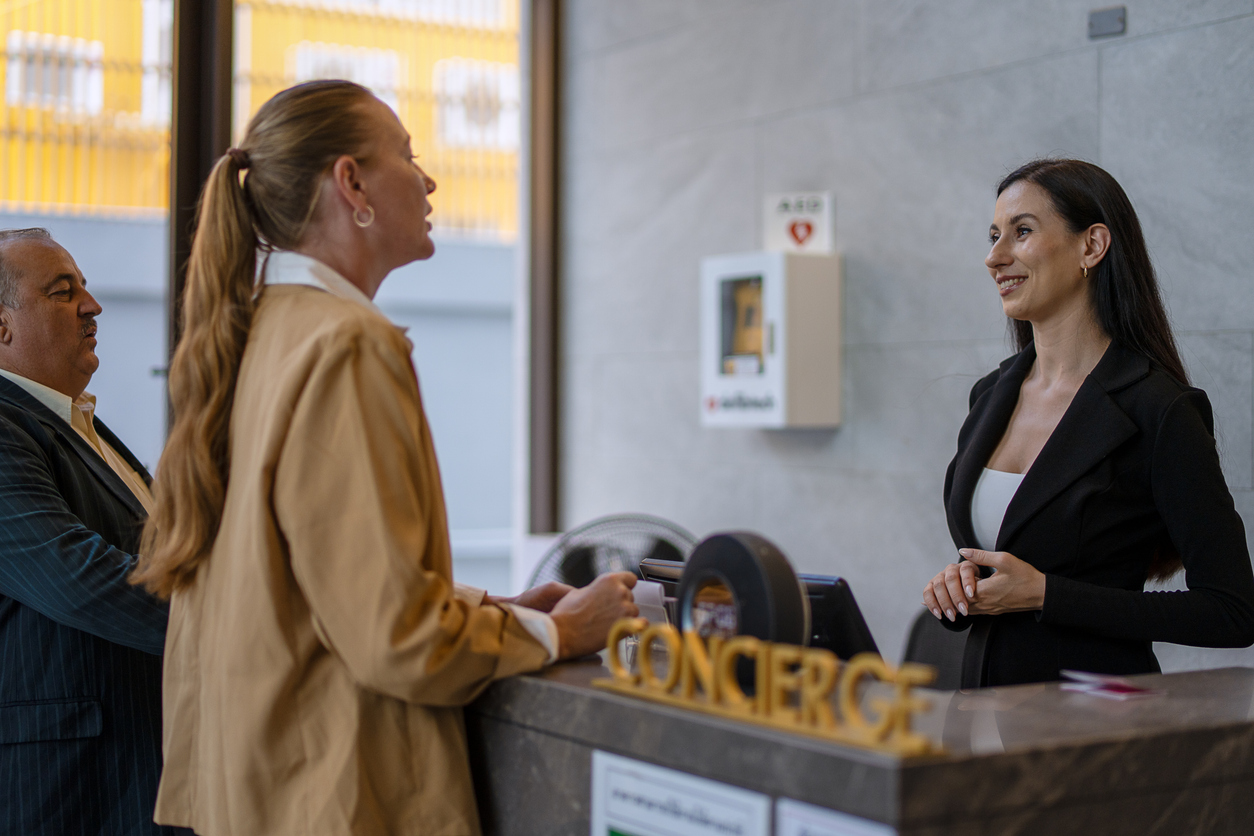
The front desk is usually the first major payment touchpoint. A smooth check-in builds confidence in the property’s payment experience overall, while delays or errors can color how guests view the rest of their stay.
Front desk payment processing covers more than collecting room payment. Staff typically need to verify payment methods, place deposit holds, and enable room charge privileges for the guest’s stay.
When these processes connect to the hotel’s wider payment ecosystem, guests can use room charges across restaurants, bars, spas, and other outlets without repeatedly providing payment details. A slow check-in or payment error can discourage guests from using on-property services. A connected process removes much of that friction.
Automated Hotel Payment Processing at Check-In and Check-Out
Automation streamlines payment processing across the whole guest journey while cutting manual work for front desk teams.
Key capabilities include:
- Pre-authorizations: automatically verify payment methods and reserve funds for room charges and incidentals before or during check-in
- Automatic folio updates: charges from restaurants, bars, spas, parking, and retail shops post to the guest folio in real time
- Digital receipts: guests get electronic receipts at checkout instead of paperwork
- Faster check-in: automated verification cuts down on manual card handling
- Quicker checkout: guests review accurate folios and approve final charges with minimal waiting
Replacing manual card swipes, paper folios, and disconnected billing with automated payment processing shortens front desk queues, improves billing accuracy, and makes the whole experience more convenient for guests and staff alike.
Room Service and In-Room Dining: A Test of Payment Convenience
 Room service should be as easy to pay for as it’s to order. Guests should be able to charge meals to their room without calling the front desk or repeating card details.
In-room tablets, QR code menus, mobile ordering, and other digital tools should connect directly to the hotel’s payment and folio systems. Once an order is confirmed, the charge should be posted automatically. This gives guests a faster experience while reducing payment verification and manual entry for staff.
Immediate posting also benefits hotel operations by:
- Reducing billing disputes at checkout.
- Minimizing front desk calls about missing or unexpected charges.
- Improving folio accuracy throughout the guest stay.
- Giving staff real-time visibility into guest spending.
- Creating a faster, smoother checkout experience.
When room service payments update instantly, guests experience greater transparency while hotel teams spend less time resolving avoidable billing questions.
Restaurants and Bars: Where Hospitality Payment Solutions Meet Hospitality Service
Hotel restaurants and bars often run their own POS systems separately from the PMS. That creates a problem the moment a guest wants to charge a meal to their room, redeem a loyalty benefit, split a check, or add a tip. Staff end up verifying room information by hand or fixing charges after the fact, which slows service and opens the door to mistakes.
Connecting the restaurant POS to the hotel’s management software solves this by giving every outlet access to the same guest data. Key benefits include:
- Shared guest profiles across the property
- Automatic room charge posting instead of manual entry
- Consistent loyalty discounts wherever the guest orders
- One accurate bill at checkout, instead of separate tabs to track down
Guests get one room number and one running tab for their entire stay. Staff spend less time chasing down payment details and more time on service.
That same connected system also handles the trickier parts of restaurant payments: split checks between guests or payment methods, gratuities applied on the fly, and discounts that process correctly the first time. For business dinners, family gatherings, or a full table splitting three ways, servers can move through payment without stepping away from the table or double-checking numbers later. Checks close faster, tables turn over quicker during a rush, and guests wrap up their meal without waiting on a billing fix.
Amusement Parks, Casinos, and Entertainment Venues on Property
 Large resorts may operate water parks, casinos, arcades, theaters, bowling facilities, and other entertainment venues that function almost like separate businesses. These outlets bring in real revenue through admission tickets, gaming credits, food and beverage, equipment rentals, and retail sales, but each one adds another payment platform to keep track of.
A connected system lets guests move between their room and any of these venues without handing over payment information again. It also gives finance teams one place to see revenue across the whole property instead of piecing it together outlet by outlet.
Mixed-use properties need a platform flexible enough to handle different transaction types in one system, including attraction tickets, arcade credits, casino or cashless gaming transactions where permitted, retail purchases, and equipment rentals. Some of these come with their own rules. Gaming operations, for example, often require controls that don’t apply to a gift shop purchase. The right platform accommodates those requirements while still feeding the data into the same centralized reporting as everything else.
Concessions and Retail: Small Transactions That Add Up
Gift shops, snack bars, pool concessions, and rental counters run a high volume of small transactions. A minor delay or error barely registers once, but multiply it by hundreds of transactions a day and it becomes a real operational drag.
For these high-traffic outlets, an integrated system matters most for speed at the point of sale. It should support contactless and mobile payments, post eligible purchases straight to the guest folio, and keep transactions moving during peak periods like a pool rush or a matinee crowd, all without adding to the reconciliation pile at the end of the day.
What to Look for in Hotel Payment Systems Providers
 Choosing a hotel payment systems provider involves more than comparing transaction fees. The right platform should support every payment touchpoint across the property while simplifying operations for finance, front desk, and outlet staff.
As you evaluate vendors, focus on whether the solution can support your current operations and scale with future growth. A connected payment platform should reduce manual work, improve reporting, strengthen security, and deliver a consistent guest experience across every department.
Use this checklist when evaluating providers:
- PMS, POS, spa, retail, and other system integrations
- Centralized reporting across revenue centers
- Room charge and contactless payment support
- Fast authorization and settlement
- PCI DSS-compliant payment security
- Fraud and dispute management
- Reduced manual reconciliation
- Scalability for additional outlets or properties
- Reliable customer support
The best providers deliver a unified payment ecosystem instead of another standalone payment application.
Questions to Ask Hotel Payment Processing Companies
Before selecting a provider, ask questions that reveal how well the platform fits your hotel’s operational needs.
- Does the system integrate with your PMS and outlet POS systems? Payment data should move automatically between the PMS, restaurant POS, spa software, retail systems, and other outlets. If staff must export reports or manually reconcile transactions, the platform is likely to create ongoing operational inefficiencies.
- What are the settlement times and transaction fees? Understand how quickly funds reach your account and whether settlement schedules vary by payment method. Review processing fees alongside the operational value the platform provides, not simply the lowest transaction rate.
- Is the platform PCI DSS compliant? Payment security should be built into the platform. Confirm that the provider supports PCI DSS compliance, protects sensitive payment data, and offers tools that reduce fraud and simplify compliance management.
- Can it support multiple payment methods through one platform? Guests expect flexibility. The system should support traditional credit and debit cards, contactless payments, mobile wallets, room charges, and emerging technologies such as wearable wristbands where appropriate.
- Can it provide one source of financial reporting? A unified payment platform should consolidate transactions from every revenue center into a single reporting environment. This reduces reconciliation time and gives finance teams a more accurate view of property performance.
- Will the platform scale with your business? Whether you plan to add new restaurants, entertainment venues, retail outlets, or additional properties, the payment system should accommodate future growth without requiring separate payment platforms or complex integrations.
Global Payment Solutions for Hospitality: Considerations for International Guests
 Hotels that welcome international travelers need payment systems that support a wide range of currencies and payment methods. Guests expect to pay with the options they use at home, whether that is a major credit card, a regional mobile wallet, or another digital payment method.
Limited payment flexibility creates unnecessary friction. Guests may abandon purchases, encounter declined transactions, or lose confidence if their preferred payment option is unavailable. A global-ready payment platform helps remove these barriers while improving the overall guest experience.
When evaluating hotel payment systems for international operations, look for features such as:
- Multi-currency support
- International credit and debit cards
- Regional mobile wallets
- Contactless payments
- Dynamic currency conversion where appropriate
- Secure processing across payment channels
- Centralized reporting across currencies and payment methods
A flexible payment platform also benefits hotel operations. Finance teams can manage transactions from multiple payment channels within one reporting system instead of reconciling separate international payment providers. This improves financial visibility while reducing administrative work.
Evaluation Checklist for Hotel Payment Processing Systems
| Evaluation Criteria | Must Have | Nice to Have |
| Integration capability | Native integration with the PMS, restaurant POS, spa software, retail systems, and other outlets with automatic transaction syncing. | Open APIs for future integrations and support for additional third-party applications. |
| Compliance and security | PCI DSS compliance, encrypted payment processing, tokenization, and fraud prevention tools. | Advanced fraud analytics, customizable security policies, and automated compliance reporting. |
| Settlement speed | Fast, reliable settlement with transparent processing fees and clear payment tracking. | Flexible settlement schedules and detailed cash flow forecasting tools. |
| Supported payment types | Credit and debit cards, contactless payments, mobile wallets, and room charge capabilities. | Multi-currency support, wearable wristbands, regional digital wallets, and emerging payment technologies. |
| Reporting and analytics | Centralized reporting across all revenue centers with automated reconciliation. | Custom dashboards, real-time revenue analytics, and advanced business intelligence reporting. |
Bringing It All Together: One Connected Guest Experience
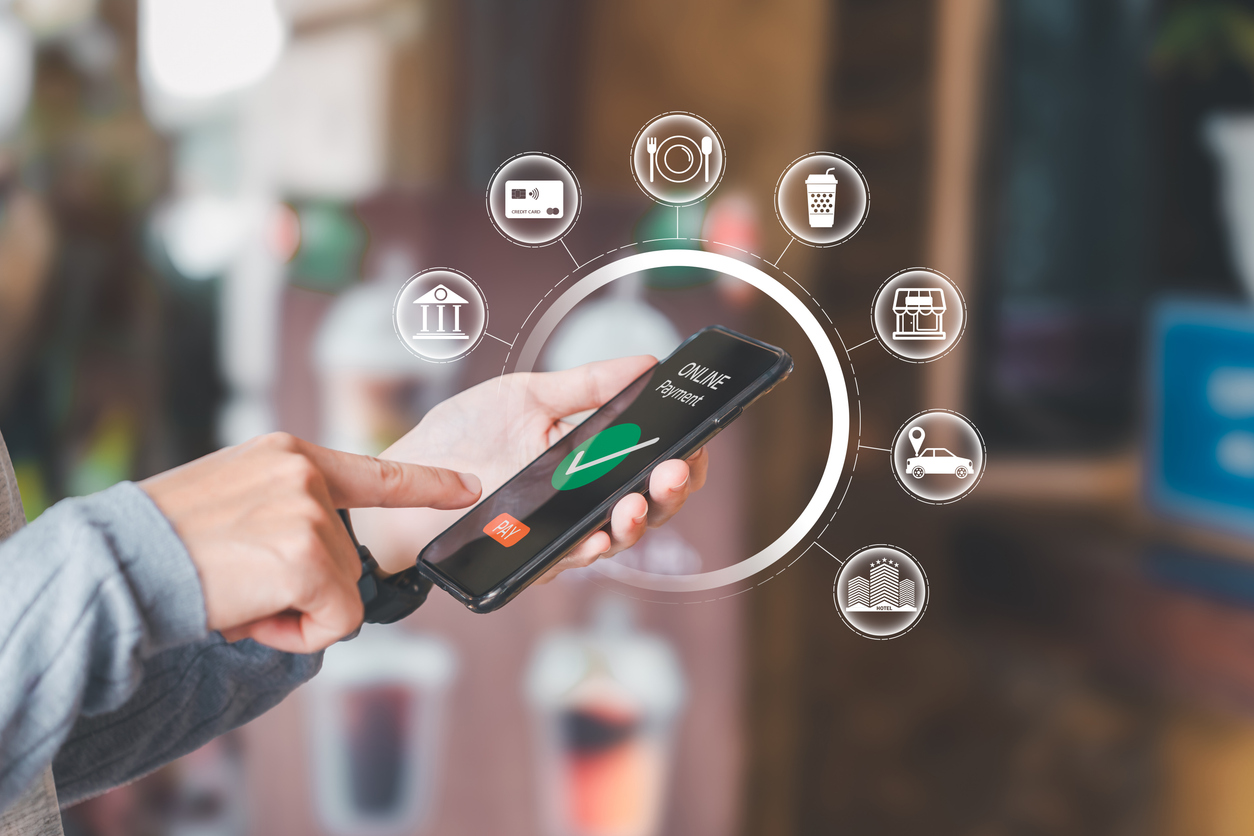 Every payment touchpoint shapes how guests remember their stay. From the front desk and room service to restaurants, retail shops, spas, and entertainment venues, guests expect every transaction to be fast, accurate, and consistent.
A connected payment ecosystem also improves the hotel’s bottom line. Staff spend less time resolving billing issues, finance teams reconcile transactions more efficiently, and managers gain better visibility into property-wide revenue. Most importantly, seamless payment experiences make it easier for guests to spend across the property without encountering unnecessary barriers.
How Zucchetti North America’s Ecosystem Supports Property-Wide Payment Processing
The solution to disconnected payment processing is not another isolated application. it’s a connected hospitality technology ecosystem in which property management, point-of-sale, reservations, revenue management, and direct booking systems can work together.
Hotels looking to create a more connected operation can explore:
Whether your goal is to streamline payment processing, improve operational efficiency, or create a more connected guest experience, an integrated hospitality technology ecosystem provides the foundation to achieve it.
Have questions about where to start? Contact the Zucchetti North America team to discuss the right combination of solutions for your property.






Related Articles

Top Hotel POS Systems: Features, Types & Recommendations
Finding the right hotel POS system does much more than process payments. It connects the...

Mobile Point of Sale for Hotels: Systems & Benefits
Imagine a guest relaxing at your poolside bar with a drink in hand, chatting effortlessly...

North America
Zucchetti North America offers hospitality solutions to hotels and other lodging providers, as well as on-site dining operations across North America.
Quick Links
Contact Us

34 West Oak St, Sturgeon Bay, WI 54235
7901 Kingspointe Pkwy Ste 9, Orlando, FL 32819
500 SW 116th Ave, Portland, OR 97225

+1.503.343.4263

sales@zucchettinorthamerica.com
©2026 Zucchetti. All rights reserved.