

Top Property Management Software: A Comparison Guide for Hospitality Leaders

Table of Contents

Selecting the top property management software is one of the most critical decisions an operator will make. In an era when guest expectations are soaring and labor shortages persist, relying on fragmented technology or outdated legacy platforms is a recipe for revenue leakage and operational friction.
To help you navigate this complex market and compare property management system plans, we analyzed the industry’s leading platforms. This property management system comparison breaks down the top players by their infrastructure, flexibility, and operational fit.
Below is a snapshot of the top 10 property management software systems dominating the market today:
| System | Best Fit | Multi-Property | Integration Depth | Implementation | Support |
| Zucchetti North America | Independent hotels, resorts, campgrounds, marinas | Single- and multi-property, chain-level deployment | Native ecosystem (PMS, CRS, RMS, POS) | Structured, hands-on with hospitality experts | U.S.-based, dedicated teams |
| Cloudbeds | Boutique and independent properties | Strong single-property, emerging multi-property | Broad third-party marketplace | Low to moderate, self-paced | Global digital tickets and chat |
| Oracle OPERA | Large global brands, enterprise, casino resorts | Built for large international chains | Extensive enterprise library | High, specialized training required | Global enterprise account management |
| Mews | Tech-forward boutique and urban hotels | Good multi-property dashboarding | API-first, open developer portal | Moderate, remote digital setup | Digital-first ticketing and help center |
| Agilysys | Mega-resorts, gaming, cruise lines | Enterprise multi-property portfolios | Strong proprietary POS and amenity connections | High, prolonged implementation | Enterprise SLA contracts |
| Stayntouch | Select-service, design, transit hotels | Growing portfolio-level support | Good core partner integrations | Low to moderate, cloud deployment | Remote helpdesk and documentation |
| RMS Cloud | Campgrounds, RV parks, holiday parks | Centralized multi-unit architecture | Strong internal native utilities | Moderate to high, steep learning curve | Regional offices with online ticketing |
| RoomRaccoon | Small boutique properties, guesthouses | Primarily single-operator | Built-in all-in-one features | Low, quick self-implementation | Online support and digital guides |
| Maestro PMS | Independent resorts, conference hotels, multi-property groups | Single-database multi-property | Deep internal modules, standard external APIs | Moderate to high | High-touch phone and training support |
| Protel | Traditional international portfolios | Centralized multi-property management | Mature legacy integration library | High, technical setup required | Global partner network |
Top 10 Property Management Software Recommendations
 Let’s take a closer look at the 10 best property management software recommendations.
1. Zucchetti North America – Best for Independent hotels, regional groups, full-service resorts, and specialized hospitality operations (like campgrounds and marinas) looking to eliminate fragmented technology stacks.

Zucchetti North America takes a different approach than traditional point solutions. Instead of surface-level API connections, the platform is built as a deeply integrated ecosystem where PMS, CRS, RMS, and POS work together by design. Backed by a global organization with over €1 billion in revenue and 700,000 customers worldwide, the North American division combines enterprise-grade reliability with dedicated regional support.
The platform merges several powerful software offerings into a single-vendor framework:
- Lodgical Solution PMS: A highly adaptive property management system engineered to handle complex operations, ranging from traditional guestrooms to boat slips, site mapping, and activity ticketing.
- Vertical Booking CRS: A master distribution platform connecting properties to 390+ OTAs, major GDS networks (reaching 600,000+ travel agents), and metasearch channels with real-time accuracy.
- Lybra RMS: An AI-driven revenue management system that tracks market trends, competitor rates, and flight search demand data to deploy real-time automated pricing.
- Simple Booking: A conversion-focused web booking engine built directly into the distribution workflow to actively maximize direct revenue.
- TCPOS: An all-in-one scalable digital point-of-sale system that unifies food, beverage, and retail operations with front-desk guest profiles.
Strengths
- A Single Source of Truth: Unifying your tech stack eliminates data silos, cuts vendor management costs, and gives your staff an unfragmented view of operations.
- Pricing Meets Conversion: Zucchetti uniquely brings pricing decisions directly to where booking decisions are made. Because the platform controls both the booking engine and distribution logic, your dynamic rates optimize instantly at the point of conversion.
- Unmatched Adaptability: Systems scale fluidly to match your workflows, whether you are a boutique urban hotel, a 300-room luxury resort, or a multi-property group managing diverse assets.
Considerations
- Best value is realized when adopting multiple components of the suite rather than point solutions.
2. Cloudbeds – Best for independent boutique hotels, hostels, and mid-sized properties looking for a user-friendly, cloud-native platform with rapid deployment capabilities.

Best for: Independent boutique hotels, hostels, and mid-sized properties looking for a user-friendly, cloud-native platform with rapid deployment capabilities.
Strengths
Cloudbeds combines property management, channel management, and a booking engine in one interface. Its open marketplace connects to hundreds of third-party apps, and onboarding is straightforward enough that properties can get up and running without a lengthy migration process.
Considerations
It works well for standard hotel operations but can fall short for properties with more complex needs like multi-property configurations, campsite management, or marina slip inventory.
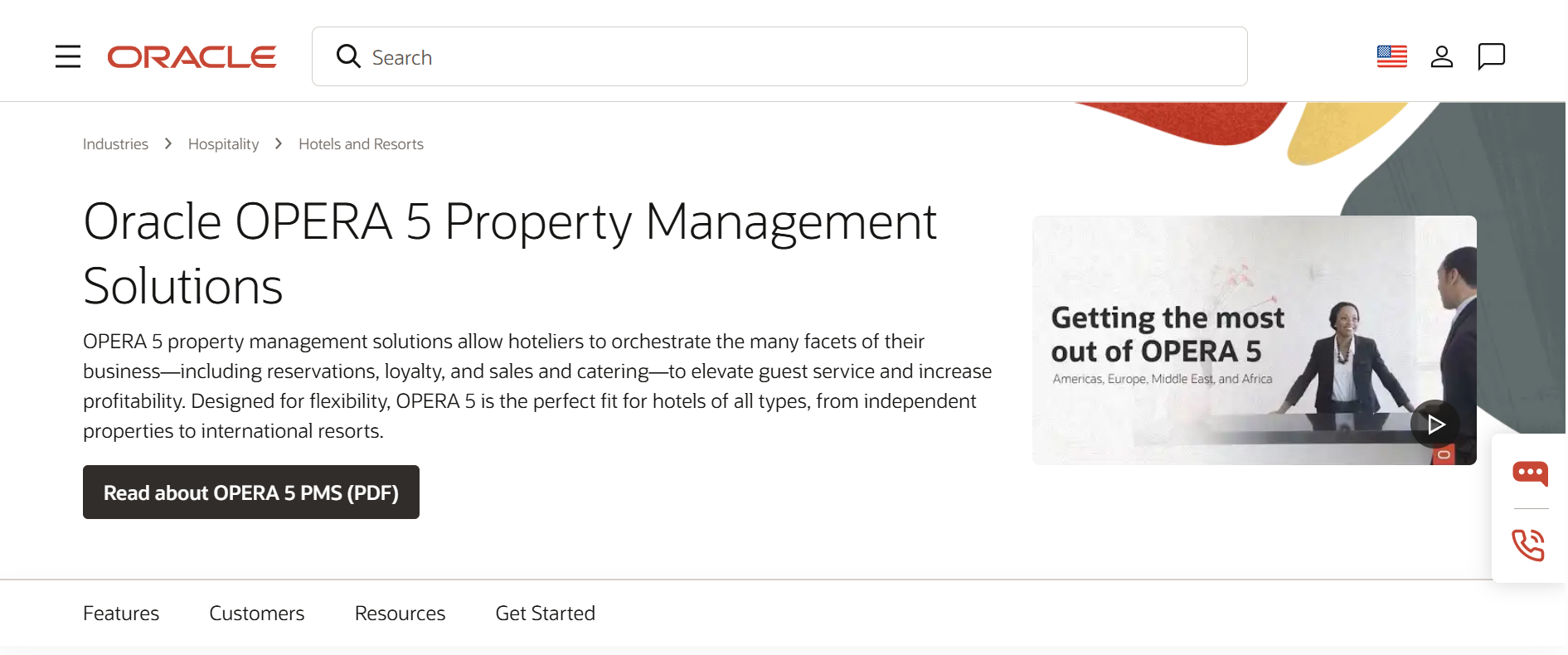
3. Oracle OPERA – Best for international enterprise hotel chains, massive gaming resorts, and large branded corporate portfolios requiring deep global standardization.
Strengths
Oracle OPERA covers virtually every operational requirement a large global brand could need, from complex corporate policies to multi-currency and multilingual support. Its multi-property controls let enterprise brands standardize operations and maintain centralized guest profiles across thousands of rooms worldwide.
Considerations
Oracle OPERA’s broad feature set is designed for large-scale operations, so implementation, training, and upgrades take careful planning and dedicated resources. It’s best suited to organizations with the internal teams to support an enterprise-level system.
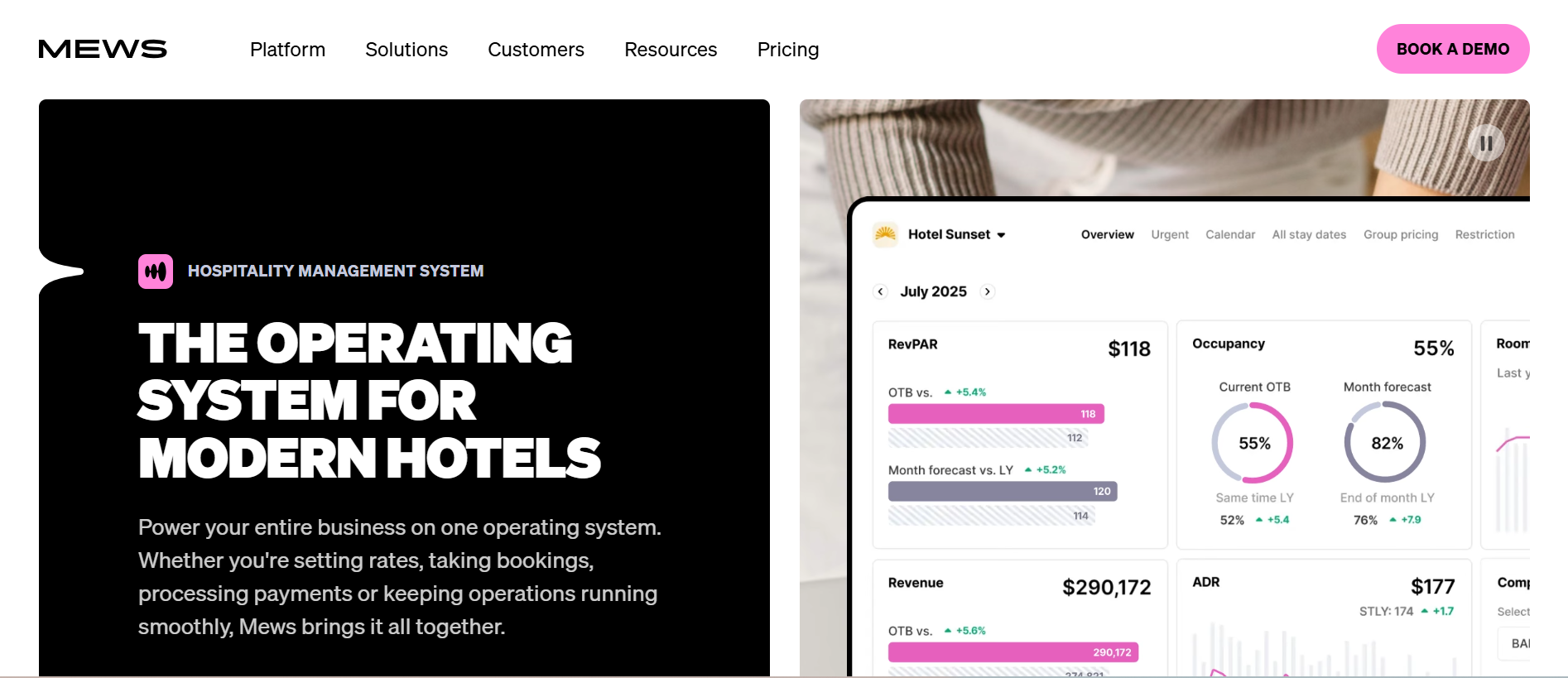
4. Mews – Best for modern, tech-forward independent properties and hybrid hospitality concepts focused on mobile guest journeys and space maximization.
Strengths
Mews features a modern user experience and an open, API-first architecture. It excels at alternative space management, allowing hoteliers to monetize areas by the hour or day (e.g., parking spaces, workspaces, meeting areas). It also automates guest check-ins, payments, and housekeeping assignments.
Considerations
Mews is built around modern, cloud-based workflows, so properties that run traditional processes or older third-party hardware should plan time for setup and transition. Support is mainly delivered through digital channels, so it’s a good fit for teams that are comfortable with self-service tools and online help.
5. Agilysys – Best for large-scale destination resorts, casino properties, cruise lines, and high-volume entertainment venues.
Strengths
Agilysys specializes in experience-driven properties where rooms are only a single component of the guest journey. It provides deep, robust management modules for things like spa bookings, golf tee times, corporate events, and high-volume enterprise retail. Its point-of-sale infrastructure is exceptionally strong.
Considerations
Agilysys is built on a modular architecture that supports large, multi-amenity operations, so deployment works best with a planned timeline and dedicated internal IT resources.
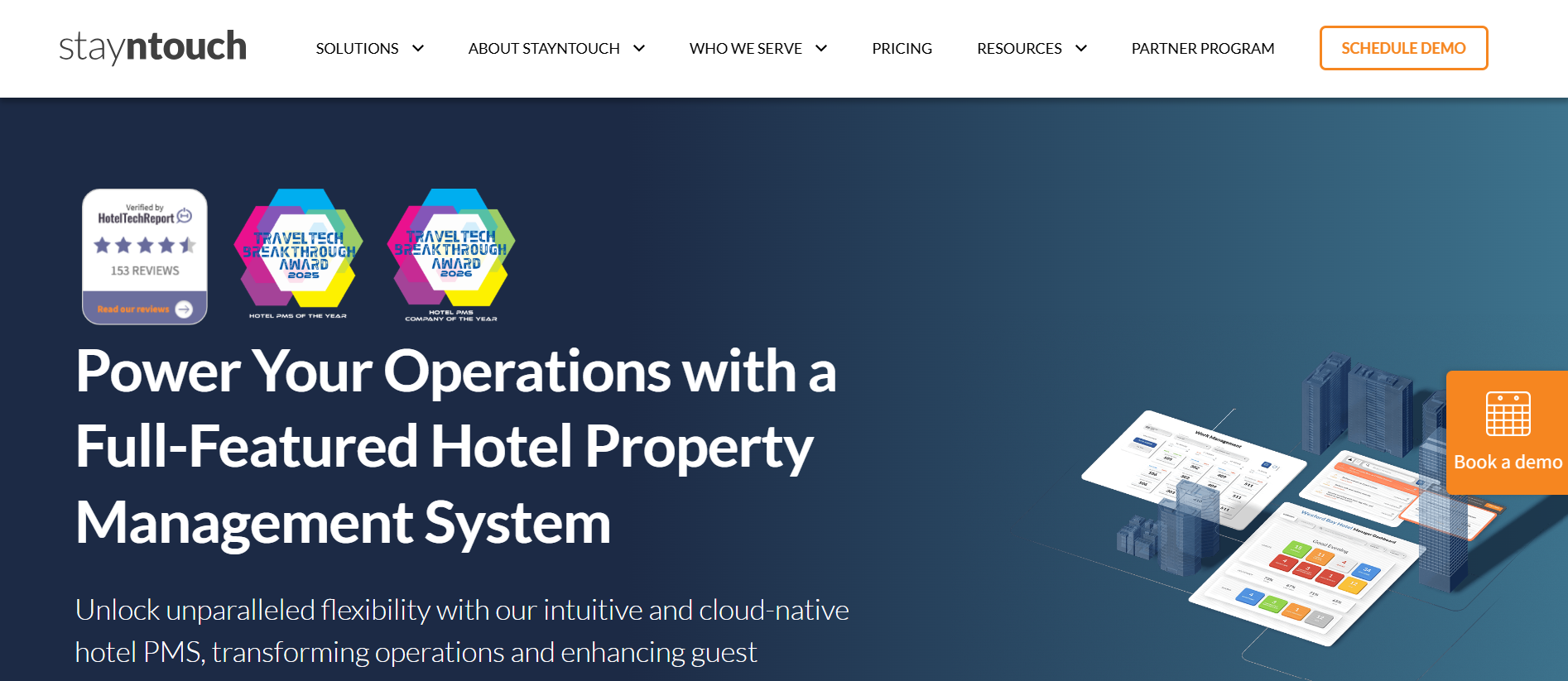
6. Stayntouch – Best for full-service and select-service properties aiming to completely remove physical front-desk bottlenecks through mobile self-service.
Strengths
Stayntouch focuses heavily on mobile, tablet-driven property management. It allows staff to handle check-ins and operational tasks from anywhere on the property while enabling guests to bypass the lobby completely via mobile check-in and digital room keys. The user interface is clean, graphical, and remarkably easy to teach new staff.
Considerations
Stayntouch is focused on property-level workflows, so groups that need centralized distribution controls or built-in revenue management forecasting will usually pair it with a separate CRS or RMS.
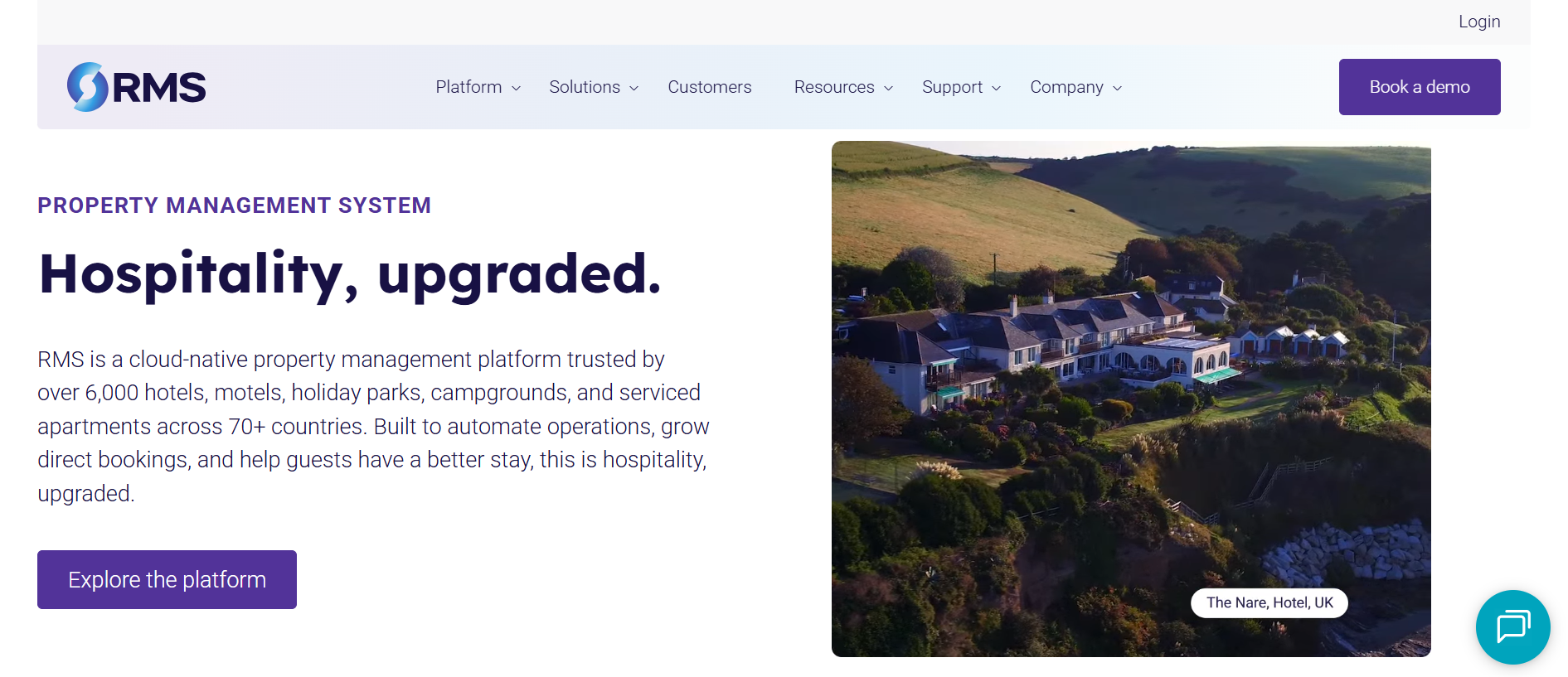
7. RMS Cloud – Best for campgrounds, RV parks, outdoor holiday resorts, and multi-property operators managing non-traditional mixed inventory.
Strengths
RMS Cloud is built around flexible rate management and inventory controls, making it a strong fit for properties with complex pricing needs like seasonal minimum stays, dynamic site allocation, and long-term corporate bookings.
Considerations
RMS Cloud offers a wide range of configuration options, so plan for thorough onboarding to help frontline staff get comfortable with the system and make full use of its advanced features.
8. RoomRaccoon – Best for small independent boutique hotels, bed and breakfasts, and guesthouses looking for a simple out-of-the-box solution.
Strengths
RoomRaccoon brings a simplified, combined PMS, channel manager, and booking engine approach to smaller properties. It focuses heavily on automation, reducing manual administrative tasks for small teams by triggering automated upsells, guest communications, and basic accounting workflows.
Considerations
RoomRaccoon is designed with smaller properties in mind, offering a streamlined, standardized feature set. Larger hotel operations, management groups, and multi-property portfolios should check that its features and third-party integrations match their growth plans.
9. Maestro PMS – Best for independent full-service resorts, multi-property operators, and conference centers requiring a single, centralized database.
Strengths
Maestro offers an exceptionally rich feature system designed for independent operators who want to retain absolute control over their systems without a large corporate IT staff. It provides over twenty natively integrated modules (spa, retail, activities, fine dining, etc.) and is backed by a highly responsive, service-oriented support culture.
Considerations
Maestro’s user interface follows a traditional, function-first layout, so properties with staff used to newer web-based tools may want to plan extra onboarding time.
10. Protel – Best for established international mid-market hotel chains and multi-property management companies focused on cross-property standardization.
Strengths
Protel provides solid multi-property database structures, enabling centralized guest profiles, corporate billing accounts, and centralized yield management rules across distinct geographical areas. Its configuration options allow corporate leadership to lock down specific operational settings across the portfolio.
Considerations
Properties moving from older on-premises Protel setups to Protel Cloud PMS should plan the move carefully and schedule time for data migration and staff training. Support is now provided through Planet, so ask about service options and coverage in your region during the evaluation.
A Practical Framework for Shortlisting the Right PMS

To avoid buying a system that limits your property’s potential, use this checklist to evaluate your options:
1. Define Non-Negotiable Operational Requirements
Every property has unique operational realities.
- If you operate a resort with an attached marina or campground, standard hotel room grids won’t work. Instead, you’ll need things like site mapping, slip allocations, and specialized event ticketing.
- Analyze your current staff turnover trends. If training takes weeks, prioritize intuitive user interfaces or choose a vendor that acts as a true implementation partner to guide your staff through onboarding.
2. Map PMS Capabilities to Your Full Tech Stack
Your PMS doesn’t operate in isolation. Pay close attention to how it connects with your central reservation system (CRS) and revenue management system (RMS).
For instance, if you use a global distribution system (GDS), the GDS requires properties to operate under a chain code, which is the role a CRS plays. It groups your property under a unified chain structure so it’s visible to the travel agents accessing GDS networks worldwide. If your PMS doesn’t have a clean, real-time connection to your CRS, rate updates and inventory availability will lag, and that gap creates overbookings and lost revenue.
3. Validate with Real-World Scenarios and References
Do not rely on software demos alone. Ask vendors how their platform handles specific, high-friction scenarios:
- How does the system calculate dynamic rates when regional demand shifts?
- What happens to your distribution inventory when a major group booking cancels at the last minute?
- Is support handled by an automated ticketing system, or do you get direct access to regional hospitality experts?
4. Plan for Where Your Business Will Be in 3–5 Years
If you’re planning to add properties, expand your outlet mix, or introduce self-service check-in, factor that into your PMS decision now. Switching systems later is a significant operational disruption, so choose a platform whose roadmap can grow with your business.
Choosing the Right PMS from the Top 10

Choosing an integrated technology ecosystem over isolated software tools delivers clear operational advantages:
- Financial Impact: Consolidating your technology into a single-vendor setup eliminates multiple software fees. More importantly, linking your booking engine and distribution channels natively lets you implement dynamic pricing strategies instantly at the point of sale, maximizing your RevPAR while lowering heavy OTA commissions.
- Staffing Efficiency: Property teams at hotels without a dedicated revenue management system often spend hours manually consolidating reports and adjusting rates across channels. A modern, automated platform handles these tasks in real time, giving your team more time to focus on guest service.
- Guest Experience: When your property management software, central reservations, and point-of-sale systems share a single database, guest profiles update instantly. Front-desk teams can see past purchase history, retail preferences, and stay notes automatically, allowing them to provide a seamless, personalized experience that drives repeat bookings.
The ideal software platform adapts directly to your specific business model, removes operational silos, and acts as a long-term partner in your property’s growth.
Explore the Zucchetti North America tech stack:
Have questions about your next step? Reach out to our team to review your current setup and see where a more connected approach could make the biggest difference for your property.







Related Articles

Technical Guide to Hotel PMS Integration
A property management system is often described as the brain of a hotel operation. But...

Best Bed and Breakfast Management Software: Top 6 Picks
Running a bed and breakfast is a balancing act. Between managing reservations, communicating with guests,...

Top 7 Property Management Technology Solutions & Innovations
Running a hotel today means managing far more than just rooms. Whether you operate a...

North America
Zucchetti North America offers hospitality solutions to hotels and other lodging providers, as well as on-site dining operations across North America.
Quick Links
Contact Us

34 West Oak St, Sturgeon Bay, WI 54235
7901 Kingspointe Pkwy Ste 9, Orlando, FL 32819
500 SW 116th Ave, Portland, OR 97225

+1.503.343.4263

sales@zucchettinorthamerica.com
©2026 Zucchetti. All rights reserved.